Royal Approval: 8 Key Takeaways from London Fashion Week AW26
Каждый предмет на этой странице был выбран редактором ELLE. Мы можем получать комиссионные за некоторые из товаров, которые вы решите купить.
If last season felt uncertain, AW26 felt assured. London didn’t attempt spectacle for its own sake. Instead, it delivered something far more compelling: clarity. This was a week about identity and understanding what London does differently and why it matters.
Royal Endorsement
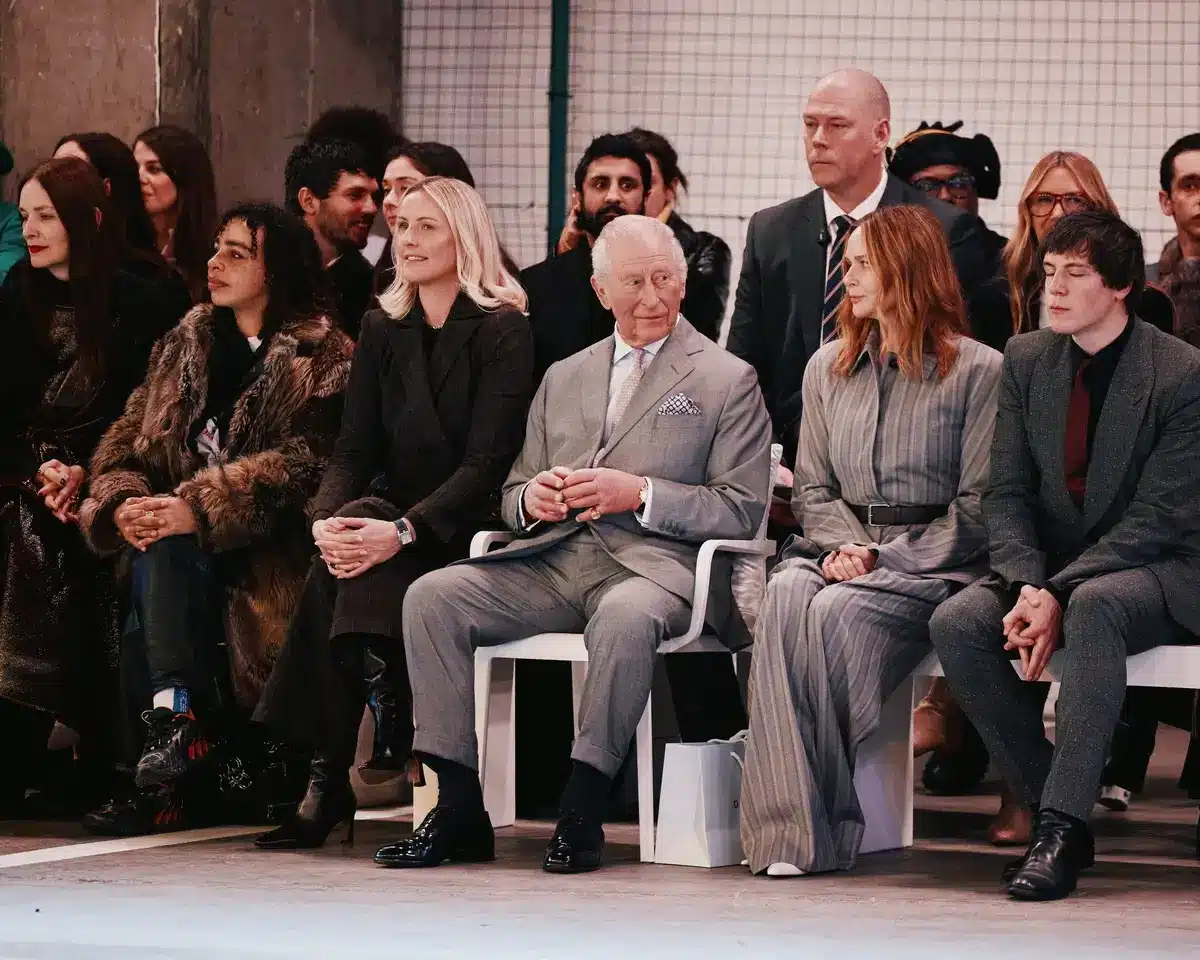
The symbolism was immediate. Tolu Coker, a NewGen alumna, opened the week in the presence of King Charles III a moment that quietly reaffirmed fashion’s place within Britain’s cultural infrastructure.
According to British Fashion Council CEO Laura Weir, brand activations rose by 21% this season. Not just shows, but appointments, salons, private dinners. London was not simply presenting collections; it was hosting conversations.
Anniversaries underscored the sense of continuity. Erdem marked 20 years at Tate Britain. Burberry staged its show ahead of its 170-year milestone. Across the city, designers convened editors and buyers in intimate settings, reinforcing a truth London understands well: influence often travels through dialogue, not volume.
Erdem
Erdem approached his anniversary not as a retrospective, but as a recalibration. Romantic codes remained: lace, brocade, painterly florals, yet they were restructured with firmer intent. High-neck Victorian collars and corseted bodices framed the body with precision, while full skirts and embroidered panels were spliced, layered and sharpened through tailoring.
Scarlet lace gowns carried a quiet authority, grounded with masculine flats that undercut any suggestion of fragility. Patchworked silks and densely worked embellishment felt less nostalgic, more architectural. Even the voluminous feathered outerwear read as protective rather than decorative.
Intellectual romanticism persists, but it is now edged with London pragmatism. Movement is controlled, volume is disciplined, sentiment is restrained. The result is not a return to Erdem’s past, but an evolution of it. A woman no longer suspended in narrative, but firmly in command of it.

Photo: Anton Bryndin

Photo: Anton Bryndin

Photo: Anton Bryndin
Di Petsa
Di Petsa continues to redefine sensuality through its signature liquid drapery and wet-look aesthetic. The collection blurs gender boundaries with fluid silhouettes that cling to the body like a second skin, evoking a modern mythological figure: somewhere between an urban Amazon and a contemporary deity. This season’s leather pieces, worn directly against bare skin, intensified the brand’s exploration of intimacy, turning fabric into something that appears poured rather than worn.

Photo: Anton Bryndin

Photo: Anton Bryndin
Toga
Toga continues to redefine minimalism through complex layering and intellectual styling. Structured jackets with sharp, slightly off-balance shoulders were softened by cardigan layers that functioned almost as accessories rather than garments. The brand’s signature references to fur appeared in deliberately raw, cut-back textures, stripping away aristocratic connotations in favour of tactile disruption. Complex shirting and open-back dresses introduced movement and air, creating a dialogue between rigid tailoring and fluid femininity.

Photo: Anton Bryndin

Photo: Anton Bryndin

Photo: Anton Bryndin
Keburia
Keburia operates in a space where discipline and fantasy meet. Victorian severity collides with a kind of surreal romanticism. A striped polo paired with a frothy, hyperbolic tutu-like skirt; python-textured bodices cinched tightly above sculptural, almost cartoonish volumes. What might tip into costume is held back by control. The construction is exacting. The balance — intentional.
There is no singular definition for this collection. It resists one. Instead, it moves between structured militarism and Wonderland proportions, between restraint and theatricality.

Photo: Anton Bryndin

Photo: Anton Bryndin

Photo: Anton Bryndin
Dreaming Eli
Dreaming Eli continues to refine her gothic vocabulary with greater control and conviction.
Corsets shed their historical associations with restraint and submission, transforming instead into instruments of strength and authority. Boning structures the body with architectural clarity; lacing frames rather than confines. The silhouette is not contained. It is empowered, shaping a confident, unapologetic feminine energy.
Distressed lace and time-worn textures add narrative depth, layering fragility over force. Sensuality remains unmistakable, but it is structured. This is not boudoir fantasy. It is a character study.

Photo: Anton Bryndin

Photo: Anton Bryndin
Chet Lo
Chet Lo’s spiked knitwear has become emblematic of a distinctly modern London hybridity. For AW26, he sharpened that language. New York velocity collided with East Asian visual codes, all grounded in a rigorously British approach to construction. Set against the feverish glow of a night market, the clothes pulsed with heat, lacquered reds, inky blacks, acid greens.
The spikes read not as embellishment but as intent.
There is something of the scarlet rose in this gesture: magnetic, self-aware, fully conscious of its beauty and equally conscious of its thorns. Attraction here is never passive. It holds its ground. It answers for itself.
In Chet Lo’s hands, hybridity becomes armour and allure at once: a woman who understands her power and the sharpness that protects it.

Photo: Anton Bryndin
Julien Macdonald
Julien Macdonald has never subscribed to the idea of quiet fashion. For him, glamour is not an accent, it is the language itself. At London Fashion Week 2026, he remains resolutely, unapologetically himself.
The runway unfolded as a study in radiance: statement party dresses cut to command attention, liquid evening gowns that skimmed the body like molten metal and elevated resort wear that blurred the line between beach and ballroom. Ostrich-feathered kaftans swept dramatically alongside crystal-encrusted swimsuits executed with couture-level precision. Each look calibrated for maximum impact.
This is a collection built on the celebration of feminine beauty and sexuality, articulated through light, movement and surface. The body is never concealed; it is exalted. Plunging necklines, thigh-high slits and second-skin drapery evoke a kind of modern Grecian sensuality, refracted through the high-gloss lens of the red carpet.
A palette of nudes, burnished golds, olive tones and deep black amplifies the illusion of luminosity, as though light itself has been poured onto the skin.
Everything works towards a singular effect: the woman is not simply wearing the dress. She remains at the centre, while the gown supports her: highlighting her presence, her confidence and the life she chooses to live on her own terms.

Photo: Anton Bryndin

Photo: Anton Bryndin
Beyond the Runway
At London Fashion Week, it was worth pausing on the accessory narrative. Particularly Samantha Siu, a brand that frames jewellery as an act of intention rather than adornment alone.
Rooted in a story of love as a driving force: love for people, for culture, for service, each piece becomes a symbol of meaning as much as beauty. Sculptural gold chains, talismanic pendants and richly set stones are the result of an almost year-long process: research, hand-carving, refinement of proportion and the pursuit of precise balance.
Yet Samantha Siu’s philosophy extends beyond aesthetics. A portion of the brand’s profits supports educational initiatives in Cambodia, STEM programmes, children’s medical care and the preservation of Asian elephants through charitable partnerships.
Here, luxury is defined differently. It is measured not only in polish and brilliance, but in depth of purpose.

Photo: PR / Samantha Siu

Photo: PR / Samantha Siu

Photo: PR / Samantha Siu