Who Is Really Changing the Creative Industry
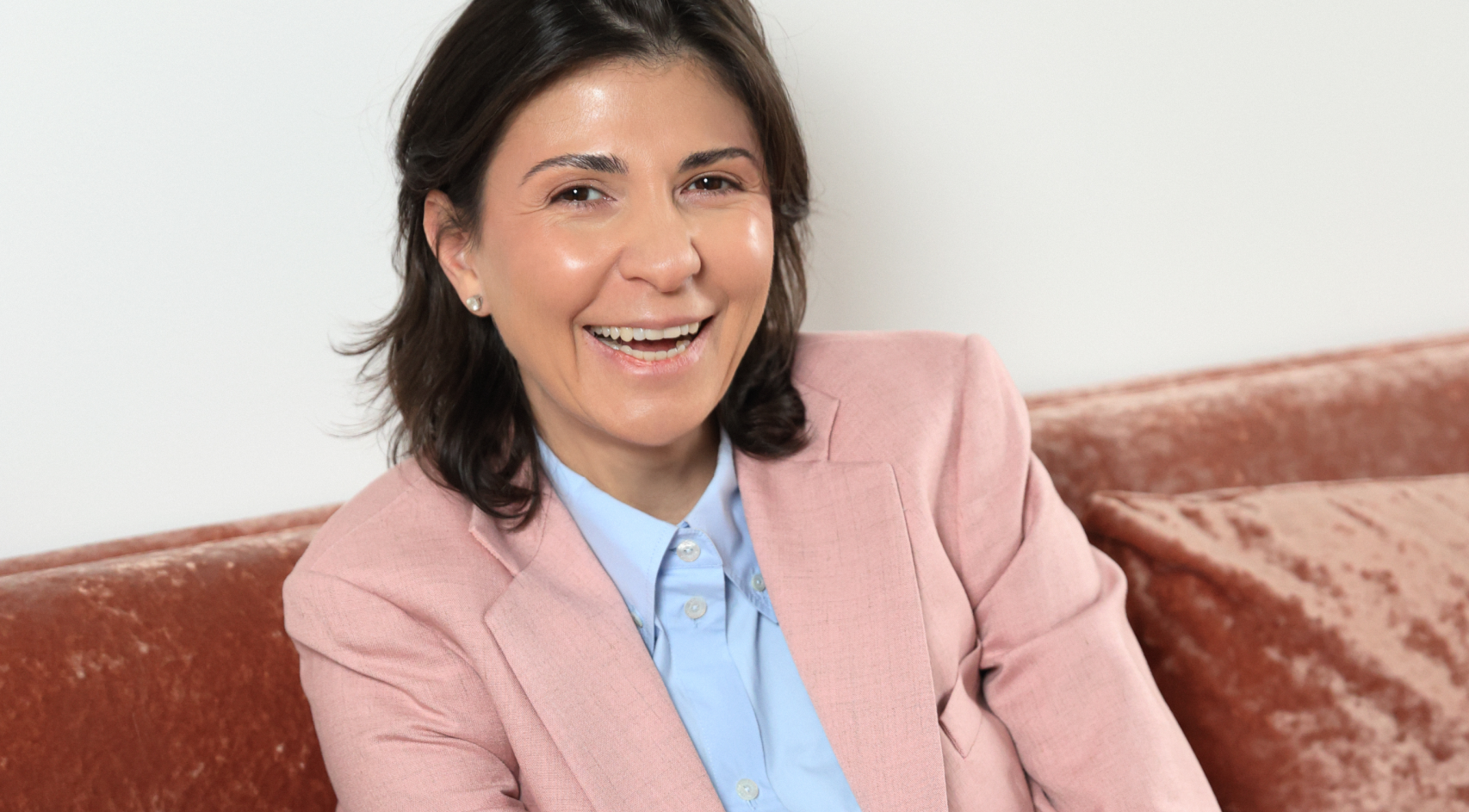
Why does representation begin not only in front of the camera, but also in the rooms where decisions are made? Why do creative industries need to move away from burnout culture? And why should women stop waiting for the moment when they finally feel completely ready to build something of their own? ELLE Oʻzbekiston spoke with Sachini Imbuldeniya, founder of the creative agency House of Oddities, about the changing nature of leadership, representation and power.

Courtesy of Sachini Imbuldeniya
For a long time, creative industries romanticised a very particular image of a leader: confident, loud and uncompromising, someone able to make decisions faster than everyone else and demand total commitment from the team in pursuit of results. This model shaped not only workplace culture, but also our understanding of who has the right to decide which ideas deserve attention.
Today, that approach is gradually changing. Empathy, diversity of experience, psychological safety and the ability to create space for new questions rather than simply provide ready-made answers are becoming increasingly important. For Sachini Imbuldeniya, this is exactly what modern creative leadership is about.
What does creative leadership look like today?
According to Sachini, a modern leader no longer needs to be the person who has an answer to every question. “Creative leadership today is less about having all the answers and more about creating the conditions for better questions, better perspectives and ultimately better work.”
It marks a significant shift away from the traditional vertical model, in which a single figure defines the direction of an entire team. In a creative environment, where success depends on the ability to see familiar things differently, rigid hierarchies can become limiting rather than productive.
As a woman founder and a woman of colour, Sachini places particular emphasis on the value of difference. For her, being different from the majority is not a barrier to creativity but one of its driving forces. “The strongest ideas come from people who see the world differently and feel confident enough to challenge convention.”
Why burnout culture no longer works
Another idea deeply embedded in the creative industries is the belief that exceptional results must require exceptional sacrifice. Long working hours, blurred boundaries between professional and personal life, constant pressure and burnout have for decades been treated almost as proof of ambition.
Sachini believes this model has reached its limit. “The old model of sacrificing people in pursuit of great work is broken.” For her, strong leadership today means creating an environment where people can feel safe, inspired and capable of producing brilliant work sustainably, without losing themselves in the process.
This is not about lowering standards. It is about reconsidering what high performance actually means. Great ideas do not necessarily have to come at the cost of the emotional and physical exhaustion of the people who create them.
Representation does not end in front of the camera
In fashion, advertising, film and media, conversations about diversity often begin with visual representation: who becomes the face of a campaign, who appears on a cover and what kinds of people we see in the frame. But for Sachini, that is not enough.
“You can put diverse faces in front of the camera, but if the decisions behind it are still being made by the same types of people, you often end up telling the same stories through the same lens.”
Real influence begins where power is distributed. Who owns the agencies, who leads the teams, who approves concepts and budgets, and who decides which ideas feel “commercial” enough and which are considered too niche? These are the people who ultimately determine which stories become part of mainstream culture.
That is why diversity among decision-makers is not only a question of fairness. It directly affects the quality and relevance of the work itself. When people with different cultural backgrounds and lived experiences sit at the same table, stories can become more precise, more nuanced and more honest, allowing the industry to move beyond familiar formulas.

Courtesy of Sachini Imbuldeniya
Why a different kind of experience can become an advantage
The principle “Difference makes a difference” sits at the heart of House of Oddities not simply as a tagline, but as a genuine working philosophy. It influences who the agency hires, which projects it chooses and how the team approaches the creative process.
Sachini explains that House of Oddities values originality, curiosity and emotional intelligence more than a conventional career path within advertising. None of the agency’s senior team comes from a traditional agency background. Instead, they all come from editorial, which naturally encourages them to question established conventions rather than simply follow industry norms.
The same attitude shapes the agency’s approach to projects. House of Oddities is not interested in creating universal ideas that could just as easily belong to any brand. “We’re not interested in making ‘safe’ beige work that could belong to any brand. The projects that excite us are the ones that challenge something, say something or make people feel genuinely seen.”
In a world overflowing with visual content, this kind of position becomes especially important. Sometimes, abandoning the desire to appeal to absolutely everyone is precisely what allows a brand to say something meaningful.
Do you need to feel ready before you begin?
There is another question that often arises for women considering starting their own business. At what point can you consider yourself experienced, confident and prepared enough to begin?
Sachini’s answer is simple. Perhaps that moment does not exist. “Waiting until you feel completely ready is probably the fastest way to never do it.”
She points out that very few founders begin a business without doubts. More often, it is a combination of instinct, excitement and fear. Women, however, often feel an additional need to prove their competence first, gaining one more qualification, one more role or one more piece of evidence that they deserve to take up space.
Sachini notes that men are often encouraged to back themselves long before they have all the answers. For women, this can mean consciously giving themselves permission to take the leap before they feel fully prepared.
Building something of your own will almost inevitably be difficult, messy and at times frightening. But it can also offer the freedom to create on your own terms, open doors for other people and demonstrate that there is genuinely room for different voices within the industry.

Courtesy of Cora Pursley @dupe
A new model of power
Perhaps one of the most important shifts taking place in creative industries today has less to do with aesthetics or technology and more to do with the very idea of power. It is becoming less associated with the person who speaks the loudest and more with the person who is able to create space for others.
And if difference truly is one of the most important sources of cultural and creative energy, then the next stage of representation must happen not only on screens, runways or billboards. It must happen in the rooms where people decide which ideas will be supported, which stories will be told and whose voices we will hear tomorrow.