Creativity: Dead or Alive?
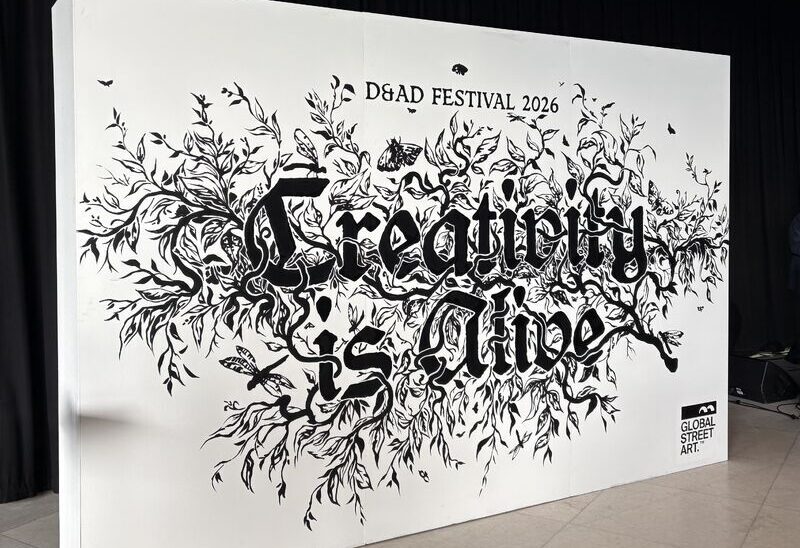
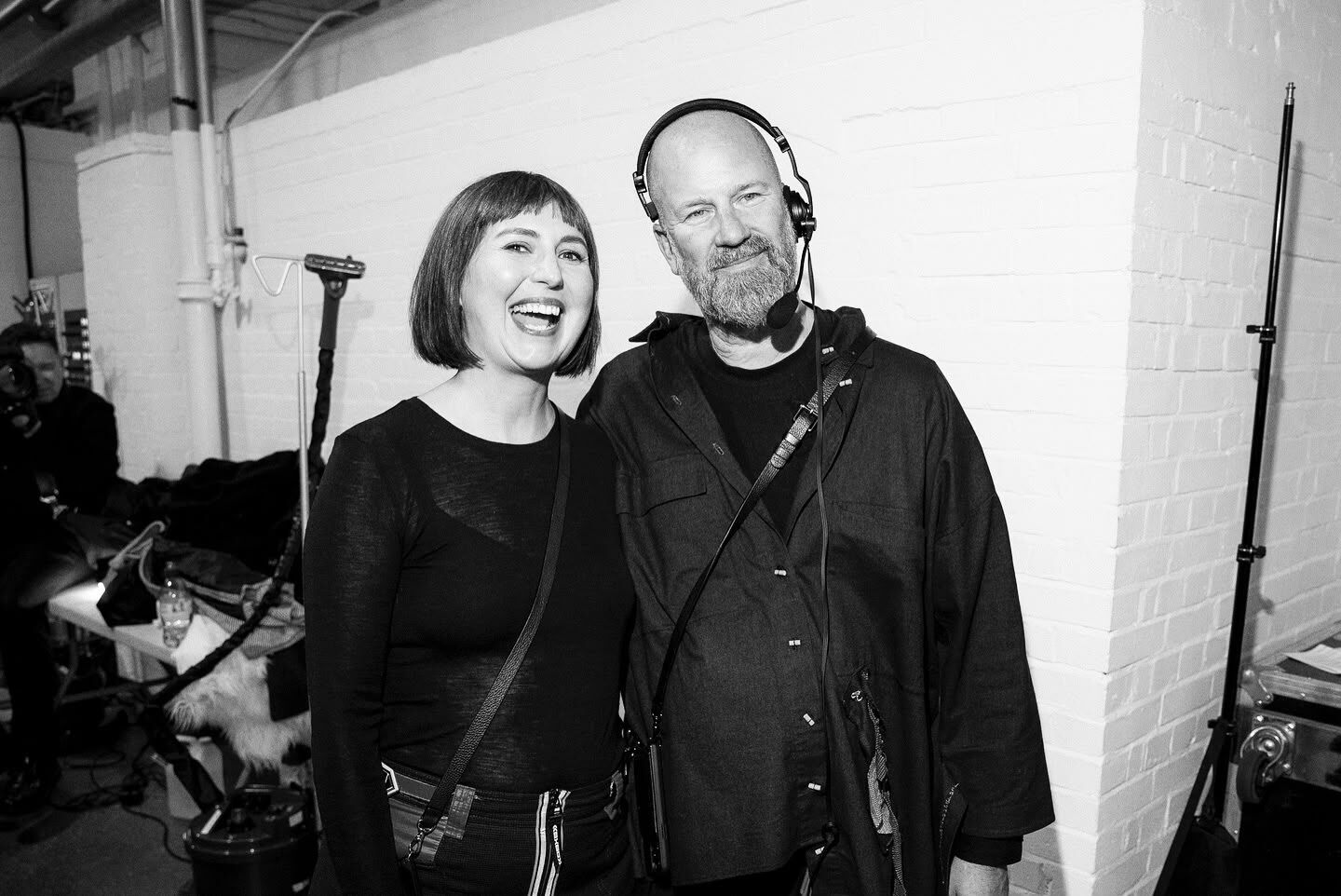
On 19–20 May, the D&AD Festival took place in London. It is one of the key events for the global creative industry, bringing together design, advertising, art direction, branding, communications, technology, and culture. It is a festival about ideas that change the profession; about work that sets new standards; and about people who continue to expand the boundaries of creative thinking.
D&AD (British Design & Art Direction) — is an organisation founded in 1962 by a group of designers and art directors who wanted to celebrate the best in creativity and raise the standards of the industry. Over more than 60 years, D&AD has become not just an award, but a professional benchmark: a place that defines what is considered bold, precise, masterful, and truly important in design and advertising today.

Together with D&AD, we asked the question: is creativity still alive? Over the course of two days, we searched for the answer alongside the festival jury and its key speakers — through talks, discussions, Jury Insight Sessions, and conversations about the future of the industry.
A Question of Life or Death
Creativity no longer exists. AI is taking our jobs, generating gigabytes of content in seconds. Machines will manage without us. A terrifying dream, but not reality.
Creativity, thinking, and the creative process are exactly what make humans unique. According to many of the festival speakers, we can blame anyone we like for the death of our own creativity: artificial intelligence, algorithms, clients, deadlines, the market, or the endless stream of content. But in reality, the reason often lies much closer — within ourselves.
It happens where we choose to scroll instead of think. To generate instead of imagine. To delegate instead of making an effort. That is where the real breaking point occurs. But doesn’t it depend primarily on us?
Will AI Replace Us All?
History is cyclical. We constantly encounter new achievements of progress — and each time, we wonder whether they will change the world, or whether by the next morning we will no longer remember what the fuss was about.
Court Williams, a creative director and strategist based in New York, answers this simply. Calligraphers in the 15th century opposed printers. Artists objected to photographers. Musicians did not want to be recorded on vinyl. Designers did not believe that design outside of paper could make sense. Moreover, all of them believed that new technology would take away their jobs and kill the industry.
Well, it is 2026. Each of us has a camera, a music player, and books in our smartphone. But it is hard to call this the death of art, isn’t it?
The Idea Is Losing Its Value
With the emergence and expansion of online tools for creativity — especially those capable of generating and reproducing content — it may seem that the idea is losing its weight. After all, now anyone can generate literally anything in a matter of minutes: from videos, images, and texts to ideas. And if there are now so many ideas, can each of them still have value?
But in reality, none of the existing platforms is yet capable of creating new ideas in the human sense of the word. AI works with already existing material. It is the general opinion of the internet, an average of the information the machine is able to process. It can combine, accelerate, structure, and suggest options. But only we can create a new vision, expand the boundaries of creative thought, and give an idea real meaning.

Stefan Sagmeister, one of the most influential graphic designers of our time, known for his provocative approach to typography, visual culture, and the subject of beauty, put it with his characteristic humour: “With AI, people do the same crap they did five years ago, but now they do it faster and cheaper.”
The possibilities of modern technology allow us to expand the limits of what is possible. To go where we could previously only dream of going. Today, we have tools in our hands that help us move faster, deeper, and often with smaller budgets. And therefore, they free up more time for creativity itself.

What Did Everyone Repeat in Unison?
Technology should be treated not as a replacement, but as a medium. As another material to work with. Just as paper, print, photography, cinema, sound, or digital space once were.
But a tool does not cancel out taste. Speed does not cancel out craft. Metrics do not cancel out meaning. A perfect image is not always stronger than one that feels alive, imperfect, and human.
On the contrary, this very imperfection is increasingly becoming proof of human presence.
Looking Ahead
Justine Armour, Chief Creative Officer International at 72andSunny, reminded us that creativity is always forward-looking. It does not only react to change, but helps us imagine what does not yet exist. So the question is not whether creativity will survive in the world of AI. The question is whether we ourselves can remain attentive, brave, and alive enough not to give away what has always been our strength.
Three trends can already be identified with absolute certainty: analogue value, community building, and creativity itself.
Analogue Value
In a world where everything can be generated, copied, accelerated, and reproduced, the value of what has physicality, texture, time, and the trace of a human hand will grow. Analogue does not necessarily mean nostalgia. Rather, it is a return to the feeling of presence.
Community Building
Creativity will increasingly exist not only around individual geniuses, but around communities. Around people who exchange experience, create together, support one another, and shape new cultural contexts. In times of technological acceleration, community may become the very thing that brings meaning back.
Creativity Itself
And finally, creativity itself. Not as a professional skill on a CV or a beautiful presentation. But as a way of thinking. a habit of asking questions and inner need to create something bigger.
So, is creativity dead? Rather, it is going through yet another test of its resilience. And as long as we are able to think, doubt, imagine, make mistakes, argue, laugh, feel, and create meaning — it is definitely alive.
Source of photos: D&AD Instagram https://www.instagram.com/d_and_ad