Club aesthetics, vintage lace and quiet confidence at Copenhagen Fashion Week
Inspired by the atmosphere of the final days of Copenhagen Fashion Week
For four days, Copenhagen becomes the epicentre of fashion, where Nordic aesthetics meet avant-garde ideas, while the city’s ever-changing weather naturally becomes part of its visual language. Once again, Copenhagen Fashion Week proved that the Scandinavian approach is about far more than minimalism: it is equally about a bold rethinking of form, materials and the very notion of the contemporary wardrobe. For Spring/Summer 2027, designers presented collections in which functionality took on a new meaning, becoming an integral part of modern luxury. Clean silhouettes acquired a sculptural quality, minimalism met retro references, and an acute attention to detail became the key tool for creating emotionally resonant looks.
As always, one of the season’s central messages was the idea of sustainability as a source of creativity. Designers continue to explore recycled materials, innovative technologies and fresh ways of reconsidering familiar elements of the wardrobe. Among the highlights of the final days were the debut shows of Mr. Larkin and Institution, both of which undoubtedly deserve attention.

PHOTO: PR-СЛУЖБА / 66°North
Beyond the runway shows, the programme was enriched by a series of special brand projects. 66°North marked the season with the opening of a new store and a themed breakfast, while C.P. Company presented the archival exhibition People Make The Clothes, Clothes Make The People, dedicated to five decades of Italian sportswear and the brand’s iconic garment-dyeing technique.
Here, we take a closer look at some of the leading collections presented during the final days of Copenhagen Fashion Week:
Institution
The profound connection between memory, cultural belonging and the feeling of otherness translates the designer’s personal experience into clothing. In Galib Gassanoff’s native Azerbaijani, the title YAD carries associations with both «foreign» and «remember», becoming the foundation of a deeply personal story shaped by a childhood surrounded by languages, traditions and craftsmanship on the outskirts of Tbilisi. The runway space was covered with carpets from the Caucasus, Anatolia, Northern Iran and Central Asia, serving as symbols of collective memory and the cultural heritage of the designer. Models walked barefoot in traditional knitted jorabs, crafted by Azerbaijani artisans from locally produced wool in the Kvemo Kartli region. The collection reinterprets ancient handcraft techniques through contemporary forms, including sculptural knitwear made from cotton cord and developed in collaboration with local communities. Silhouettes reshape the human body through contrasting materials, ranging from silk to stainless steel, while tetris coins applied to the fabric become a metaphor for freedom and overcoming historical limitations. Much of the collection is crafted from natural fibres, including materials sourced from the archival stocks of premium Italian manufacturers, making each piece unique and limited. Special knitwear in silk, cashmere and mohair further explores craftsmanship and sustainable practices, bringing personal memory, artisanal traditions and cultural identity together in one cohesive visual narrative.

Photo: James Cochrane

Photo: James Cochrane

Photo: James Cochrane
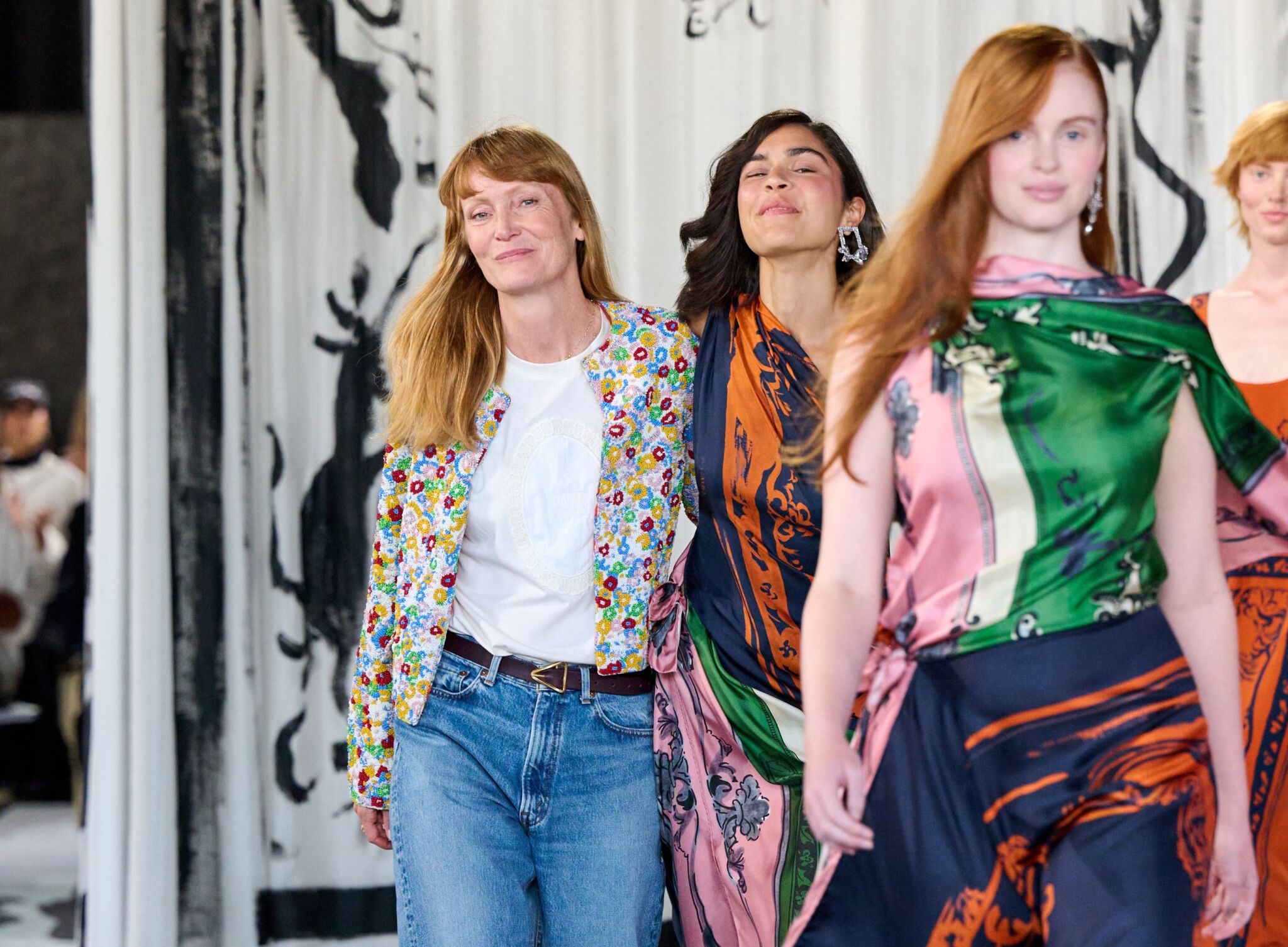
Stine Goya
Returning to Copenhagen’s fashion calendar after a two-year hiatus, Stine Goya presented a collection celebrating artistic exchange, collective imagination and the belief that the future is shaped through shared creative exploration. The designer draws a parallel between the atmosphere of the early 20th century and the present day, a time marked by profound transformations and rapidly shifting points of reference. This sense of uncertainty forms the emotional foundation of the collection, titled Before. Expressionism serves as its visual starting point, translated into saturated jacquards, painterly floral compositions and richly layered textures. Floral motifs are reinvented across prints, embroidery, beaded embellishment, linen and denim, taking on new forms and meanings. A recurring frame motif appears throughout the collection in linings, embroidered outlines and crystal detailing that accentuates the silhouette. Sculptural jackets and duchesse satin dresses feature fluid lines of construction, seemingly following the natural curves of the body. Among the most distinctive pieces are garments assembled from joined silk scarves, symbolising creative dialogue and the power of collective creation.

Photo: James Cochrane

Photo: James Cochrane

Photo: James Cochrane
Herskind
An exploration of inner confidence expressed through naturalness, movement and a sense of freedom lies at the heart of the collection. The designer portrays a woman who has no desire to demand attention, instead expressing herself through her choice of clothing, the tactile qualities of fabrics and the effortless movement of silhouettes. The presentation of Quiet Confidence was conceived as a dialogue between the stillness of classical sculptures and the living energy of the models, transforming the runway into a space for reflection on the nature of art. The collection brings together lightweight linen, silk, soft cotton, cashmere and jersey, allowing the beauty of the materials to emerge through movement and the passage of time. Herskind’s signature approach to tailoring takes on a softer expression: precise lines become more fluid, while structure is infused with a sense of freedom. Transparent layers of organza, flowing satin surfaces and revealing details create a sensual aesthetic in which allure is expressed with subtlety and ease.Dresses take centre stage, balancing femininity, strength and lightness, while denim, leather and relaxed silhouettes introduce a contemporary contrast. The colour palette draws from the natural landscape of a summer day, spanning chalk, sand, khaki, earthy tones and black.

Photo: James Cochrane

Photo: James Cochrane

Photo: James Cochrane
The Garment
The Garment explored the art of observation and the beauty of travel — not as an escape, but as an experience capable of transforming one’s perception of the world. The inspiration for the season lies not in the journey itself, but in the memories, impressions and quiet discoveries that a person brings home. The collection embraces the romance of unhurried routes, vintage postcards, faded photographs, Mediterranean landscapes and cultural discoveries, turning clothing into a personal archive of lived moments. The Garment ’s creative team explored the image of a traveller whose wardrobe is built over time and carries a history of its own, rather than simply following fleeting trends. The season’s pared-back silhouettes take shape through impeccable shirts, sculptural dresses, relaxed tailoring and versatile wardrobe staples, enriched with vintage lace, embroidery and handcrafted details. Cotton poplin, sheer materials, silk and fine knitwear come together to create a sense of lightness and natural movement. The palette of ivory, pistachio, vanilla, caramel and warm white evokes Southern European architecture, marble sculptures and the sunlight of historic cities. The show took place at the Thorvaldsens Museum, a space closely connected to the legacy of Danish sculptor and traveller Bertel Thorvaldsen, whose life became one of the sources of inspiration for the brand’s creative director.

Photo: James Cochrane

Photo: James Cochrane

Photo: James Cochrane
Munthe
Munthe envisions the artist’s studio as a space where ideas take shape, bringing together art, craftsmanship and freedom of expression. At the heart of the collection is the figure of the female artist, for whom the studio becomes not simply a workplace but an entire universe of creative exploration. Naja Munthe examines the harmony between masculine and feminine codes, pairing precise tailoring with fluid, romantic silhouettes. The collection brings together ruffled dresses, workwear-inspired trousers, oversized denim, jumpsuits, knitwear embellished with multicoloured pearls, crochet lace tops and structured jackets styled with ties. The colour palette moves through shades of blue, lemon, cream, rich petrol green and deep chocolate, reflecting the atmosphere of an artist’s studio. A special element of the season is the Art Monday collaboration with Australian artist Judith Sinnamon, known for poetic oil paintings that capture the interplay of light and the beauty of the Australian landscape. Her artistic language becomes seamlessly woven into the visual identity of the collection, strengthening the dialogue between fashion and contemporary art. The collection ultimately pays tribute to women who use creativity to challenge established boundaries, shape the cultural landscape and inspire the world around them.

Photo: James Cochrane

Photo: James Cochrane

Photo: James Cochrane
Birrot
Birrot presented a reflection on inner calm, a sense of protection and the journey back to oneself. The designer’s personal inspiration came from a trip along the Irish coast, where the movement of fabric in the wind became the starting point for the entire collection. This impression led to the extensive use of weightless crepe, enhancing the feeling of freedom and natural fluidity throughout the looks. Soft pink occupies a central place in the palette, complemented by ivory, brown and black, while vintage blue denim and vivid scarlet provide striking accents. The collection also sees the return of Soonji, a translucent fabric inspired by traditional Korean hanji paper, distinguished by its soft texture and delicate transparency. The designers experiment with Birrot’s signature Lay constructions, introducing new interpretations of dresses, blouses, cropped polos, layered skirts and an oversized windbreaker made from recycled nylon, creating a compelling contrast with the matte surfaces of the core materials. Transformability is another defining element of the season: scarves become skirts, long-sleeves turn into T-shirts, while accessories and wardrobe pieces offer multiple styling possibilities through carefully considered construction.

ФОТО: PR-СЛУЖБА / Birrot

ФОТО: PR-СЛУЖБА / Birrot

ФОТО: PR-СЛУЖБА / Birrot
Mr. Larkin
The show coincided with the thirteenth anniversary of the revival of Casey Larkin’s label, marking a significant new chapter in its evolution. The collection centres on resilience, gratitude and the ability to preserve one’s identity despite shifting cultural and economic circumstances. The designer draws inspiration from her travels, vintage discoveries, Texan roots and many years of life in Copenhagen, bringing these influences together in a contemporary interpretation of Mr. Larkin’s signature aesthetic. Archival silhouettes appear alongside new designs that point towards the brand’s future direction. Particular attention is given to styling, with clothing treated not as a reflection of fleeting trends but as a natural part of everyday life and a means of personal expression. A light-toned palette is punctuated by vivid colour accents, diverse textures, lace, intricate beadwork and decorative elements inspired by lucky charms. The season also marked the expansion of the footwear line and the increased use of responsibly sourced materials, including organic cotton, FSC-certified viscose, TENCEL™ fibres and carefully selected deadstock fabrics. Lucky became both a tribute to Mr. Larkin’s heritage and a confident step towards the future, where individuality, optimism and practicality remain at the core of the brand.

Photo: James Cochrane

Photo: James Cochrane
Iamisigo
Through the lens of African artisanal heritage, Iamisigo explores the relationship between people, nature and cultural memory. The project draws inspiration from Ngũgĩ wa Thiong’o’s novel Wizard of the Crow, in which ecological questions are inseparable from struggles over land, identity and freedom. Designer Bubu Ogisi examines how traditional knowledge and craftsmanship can become not only an artistic language but also a political statement capable of preserving collective memory across generations. Architectural silhouettes occupy centre stage, existing somewhere between sculpture and clothing and inspired by the *lukasa* — the sacred memory board of the Luba people, traditionally used to preserve history without written language. These sculptural forms transform garments into independent carriers of cultural identity. Almost every piece is created from recycled and plant-based materials sourced across different parts of Africa, including banana fibre, sisal, cotton, wood, recycled aluminium, glass and natural dyes. Nothing is treated as waste: leftover yarn and fabric are reintegrated into new pieces, preserving traces of craftsmanship and time. Another important element of the collection is the collaboration with adidas, through which selected elements created at an experimental deconstruction workshop during Copenhagen Fashion Week were seamlessly incorporated into the garments.

Photo: James Cochrane

Photo: James Cochrane

Photo: James Cochrane
Swedish School of Textiles
As part of Copenhagen Fashion Week, the Swedish School of Textiles presented its graduate show, bringing together 22 collections by emerging designers. The project introduced a new generation of creatives exploring the possibilities of fashion through experimental textiles, construction and in-depth material research. Each collection examined how clothing can move beyond practicality to become an independent form of communication. Designers embraced playfulness, humour and unexpected visual ideas, transforming familiar objects into expressive fashion artefacts. Among the works presented were shoes resembling mops, dresses incorporating integrated lighting, trousers constructed from nails and a bag reimagined from the shape of a beanbag chair. The show highlighted the importance of the creative process, where experimentation with form, texture and material becomes the foundation of a designer’s statement. Graduates explored a wide range of techniques, including weaving, embroidery, wool work and experimentation with unconventional materials. The runway revealed an equally broad spectrum of approaches, from overt irony to more subtle conceptual ideas embedded within the very construction of the garments. The Spring/Summer 2027 graduate show offered a vivid portrait of a new generation of designers who see fashion as a space for experimentation, research and artistic dialogue.

Photo: James Cochrane

Photo: James Cochrane

Photo: James Cochrane
Nicklas Skovgaard
Nicklas Skovgaard transformed his runway presentation into a meticulously choreographed theatrical performance, reflecting his distinctive approach to bringing fashion and art together. Rather than opening with a conventional model walk, the show began with a vintage car from which members of the fictional pop group Skovgaardettes emerged, led by Maja Lainer of True Blue. Their live performance, created in collaboration with independent platform Brodie Sessions, established the atmosphere of a nostalgic spectacle inspired by the cultural spirit of the 1960s. The collection grew out of the designer’s fascination with legendary female musical groups of the past, including The Supremes, The Ronettes and The Shangri-Las. Skovgaard reinterpreted this aesthetic through his own fictional band, creating a wardrobe composed of small capsule series arranged in groups of three looks. The collection featured variations on checked patterns, voluminous 1960s-inspired suits, leather pieces with a playful rebellious attitude and the brand’s recognisable knitwear silhouettes. The designer also continued to develop his signature dresses in crinkled jersey, introducing pastel taffeta and concluding the show with looks crafted from floral jacquard.

Photo: James Cochrane

Photo: James Cochrane

Photo: James Cochrane
Caro Editions
Caro Editions translated the atmosphere of nightlife into clothing, drawing on memories of those moments when the night has only just reached its peak. Founder Caroline Bille Brahe looked to women leaving clubs at dawn, capturing a sense of confidence, lightness and a celebration that feels deliberately unfinished. The collection explores the relationship between fashion and nightlife culture, with each look defined by movement, detail and individual character. Caro Editions revisits the aesthetics of vintage eveningwear, precise tailoring and everyday dressing through the lens of contemporary femininity and intuitive design. At the heart of the season are the brand’s signature elements — craftsmanship, intricate finishing and couture techniques that transform familiar silhouettes into distinctive pieces. Ikat emerges as one of the collection’s key motifs, appearing across prints, embroidery, crystal embellishment and sculptural details, while bows, pearls, florals and sequins bring an expressive, playful quality to the looks. Among the season’s defining pieces are sculptural jackets, capri trousers, a tulle coat decorated with florals and lightweight dresses paired with boleros, striking a balance between elegance and ease. Craftsmanship remains central to the collection, with the designers incorporating vintage materials, reconstruction and hand-finishing to give each piece an individual character. As part of the season, the brand also presented a collaboration with Levi’s, reworking eight vintage jackets with archival Chanel detailing, alongside a partnership with footwear label Heavenly Jelly.

Photo: James Cochrane

Photo: James Cochrane

Photo: James Cochrane