
Collagen or Hyaluronic Acid: What Really Helps Keep Skin Looking Youthful?
Every year, the beauty industry introduces new ways to “stop aging.” Some products promise to restore collagen, while others claim to replenish hyaluronic acid levels. These ingredients can now be found almost everywhere — in creams, serums, supplements, and cosmetic treatments.
But do we really need to choose between them? Or do they serve completely different purposes? Here’s what modern science says.

Why Does Skin Start to Age?
After the age of 25, the body gradually begins to produce less of its own collagen. According to research, collagen levels decrease by approximately 1% per year. At the same time, levels of hyaluronic acid — a substance that helps the skin retain moisture — also begin to decline.
As a result, the skin gradually becomes less firm, the first wrinkles appear, and the face starts to lose some of its freshness and volume.
However, collagen and hyaluronic acid play very different roles in this process.

Collagen — The Skin’s Structural Framework
If you imagine the skin as a mattress, collagen is its internal spring system. Collagen fibers are responsible for the skin’s density, strength, and ability to resist the effects of gravity.
As collagen levels decrease, the skin gradually begins to lose firmness. Wrinkles become deeper, while facial contours may appear less defined. This is why collagen is associated less with hydration and more with maintaining the skin’s long-term firmness and structure.
Hyaluronic Acid — A Source of Hydration
Hyaluronic acid performs an entirely different function. It is one of the most effective molecules when it comes to retaining water. It acts as a kind of moisture reservoir, helping the skin stay smooth, plump, and visibly fresher. As hyaluronic acid levels decline, the skin may become drier and duller, while fine lines can appear more noticeable. This is why the hydrating effects of a hyaluronic acid serum can often be seen almost immediately after application.

Which Works Better?
The answer may be surprising: collagen and hyaluronic acid are not competing with each other. One supports the skin’s structure, while the other helps maintain its hydration levels. This is why modern anti-aging routines often combine both approaches.

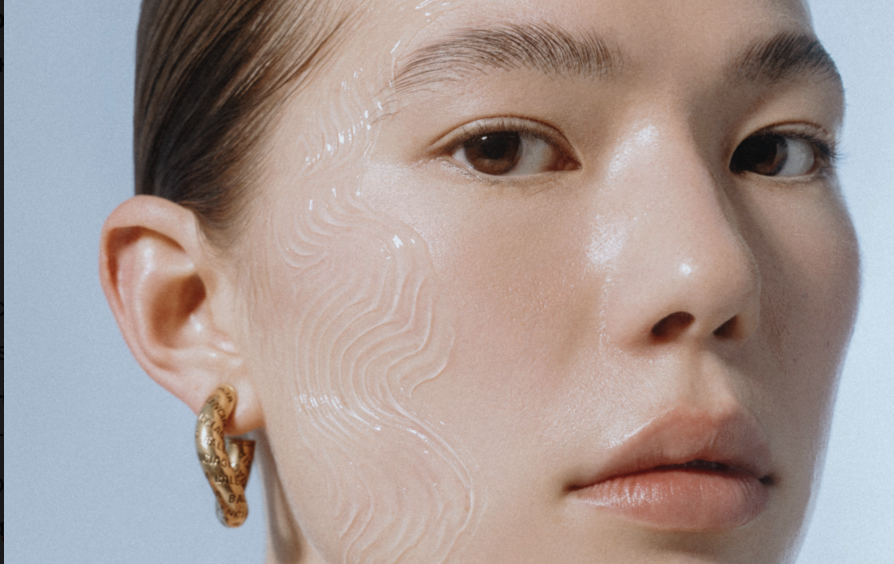
Earrings Balenciaga
Does Collagen in Skincare Work?
Not exactly.
Collagen molecules are too large to penetrate deeply into the skin. As a result, a collagen cream primarily works as a moisturizing product, helping to reduce moisture loss and leave the skin feeling smoother. However, applying collagen to the skin cannot make it start producing new collagen on its own.

What About Collagen Supplements?
he situation here is different. In recent years, several large reviews of scientific studies have suggested that hydrolyzed collagen peptides may help improve skin elasticity and hydration while reducing the appearance of fine wrinkles.
However, results are not immediate. Most studies report the first visible changes after approximately 8–12 weeks of regular supplementation.

How to Choose Hyaluronic Acid
Not all hyaluronic acid is the same. High-molecular-weight hyaluronic acid primarily remains on the surface of the skin, helping to reduce moisture loss. Low-molecular-weight hyaluronic acid can penetrate further into the upper layers of the epidermis, supporting skin hydration. This is why many modern formulas combine several different molecular weights of hyaluronic acid.

What Really Stimulates Collagen Production?
When it comes to ingredients with some of the strongest scientific evidence behind them, the list may look slightly different from what you might expect. Retinoids are considered the gold standard in skincare targeting visible signs of aging. They stimulate the activity of fibroblasts — the cells involved in producing new collagen.
Daily sun protection is equally important. Ultraviolet radiation contributes to the breakdown of collagen fibers, which is why consistent SPF use remains one of the most important ways to help prevent photoaging. Peptides may also play a supporting role by helping maintain the skin’s natural repair processes.

The Bottom Line
If your goal is to quickly restore a feeling of freshness and hydration to the skin, hyaluronic acid can be an excellent choice.
If your priority is maintaining skin firmness over the long term, it is worth taking a more comprehensive approach — including sun protection, retinoids, and, if desired, hydrolyzed collagen peptides.
The most important thing to remember is that youthful-looking skin rarely depends on a single ingredient. The most effective skincare routines work in several ways at once — protecting the skin, maintaining hydration, and helping it preserve its own natural resources for as long as possible.

Photographer & Retoucher: Levin Lee
Model: Sanrai Herrmann (Modelwerk)
Hair & Makeup Artist: Christina Remche
Production Assistant: Victoria Li
Photographer’s Assistant: Juri Tiedemann