MOMONGA: How Sun Group Is Introducing Tashkent to a New Format of Japanese Cuisine
MOMONGA Brand Chef and UNI Paris Chef Dmitry Pak on Japanese DNA, the Paris school, the hand roll format, and Tashkent’s new gastronomic culture
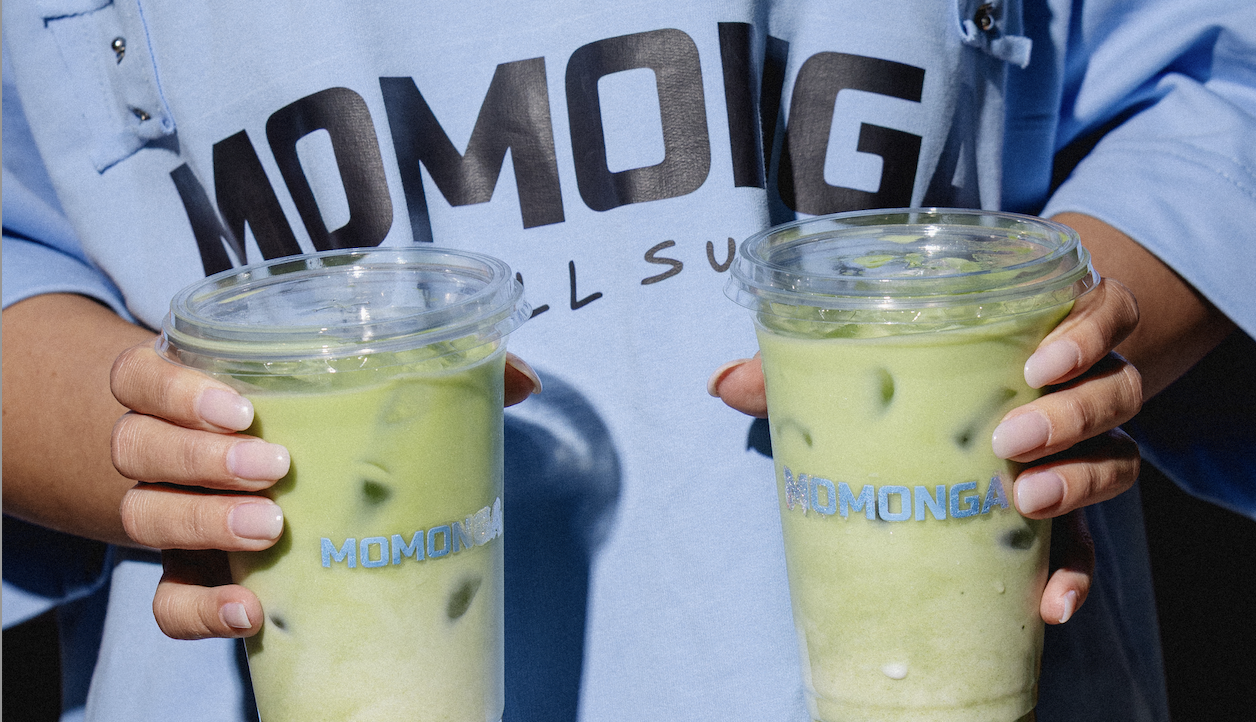
MOMONGA, a new project by the Sun Group restaurant holding led by Alexander Orlov, is preparing to open in Tashkent. Its concept brings together contemporary Japanese cuisine, street food, music, and urban culture around the format of a hand roll bar.

The kitchen at MOMONGA is led by Dmitry Pak, the project’s Brand Chef and the chef of UNI restaurant in Paris. His career has taken him through Berlin, Montenegro, Saudi Arabia, London, and Paris. Yet Japanese cuisine has never been simply one stage of his professional journey — it is part of his culinary DNA. At MOMONGA, it meets French techniques, a contemporary approach to ingredients, and an entirely different restaurant experience.
We spoke with Dmitry about his professional style, Paris, Japanese cuisine, hand roll bars, and why MOMONGA has no intention of adapting itself to the conventional idea of a Japanese restaurant.
A Professional Style Built on High Standards
Dmitry Pak says one of the defining characteristics of his approach to work is demanding a great deal — first from himself, and then from his team.
“I have high expectations of myself and everyone else. I work a lot myself, I try to bring everything as close to perfection as possible, and I expect the same from my colleagues and the people who work under me.”
For a restaurant, the chef’s idea alone is not enough. What also matters is how accurately the team can reproduce it. At MOMONGA, Dmitry places particular emphasis on consistency: a dish should remain equally good regardless of who is working at the station or when a guest arrives.
For him, however, cooking is not only about technique. The emotion a person receives matters too.
“A person should feel something. Preferably something positive.”
Dmitry also treats guest feedback primarily as a working tool. Complaints and mistakes are inevitable in the restaurant business, but the team’s task is to reduce them constantly and understand exactly where something went wrong.
For the chef, the simplest ingredients can be the most revealing. An ordinary chicken breast or fried potatoes can quickly show a cook’s level — how well they understand the product and how confidently they work with temperature, timing, and texture.

Japanese DNA and the Paris School
Despite his international experience, Dmitry says Japanese cuisine has never been something he left behind.
“It doesn’t bring me back to Japanese cuisine — I never really left it. It’s already there in the DNA, in the genetic code.”
At the same time, France has had the strongest influence on his professional style.
“One hundred percent France. It’s the great capital of gastronomy, sauces, techniques. And the produce there is probably the best.”
The French school gave him tools that are now also used in contemporary Japanese cooking: working with sauces, cream and butter, complex techniques, demi-glace, and a deeper approach to balancing flavour.
That combination has become one of MOMONGA’s defining characteristics. There is no attempt here to reproduce traditional Japanese cuisine literally. Japanese precision and respect for ingredients remain the foundation, but the chef’s personal perspective is layered on top.
Authenticity Without Rigid Boundaries
According to Dmitry, contemporary gastronomy has long moved beyond the strict separation of cuisines.
“There are no boundaries anymore, especially in cooking. You can mix any cuisine with any other cuisine — and that’s where the individuality of the author comes through.”

For MOMONGA, that is especially important. The Japanese foundation becomes a starting point rather than a limitation.
At the same time, Japanese discipline remains behind this apparent freedom: ingredient temperature, cooking technique, texture, balance, and respect for the product. It is this combination of principles that makes it possible to create contemporary food that does not try to copy the classics, but does not lose its connection to the original culture either.
MOMONGA Is Not a Classic Japanese Restaurant
The main difference with MOMONGA is the format itself. This is not a Japanese restaurant in the conventional sense, and it is certainly not a place where the menu revolves around familiar Philadelphia and California rolls, baked rolls, and large amounts of mayonnaise-based sauces.
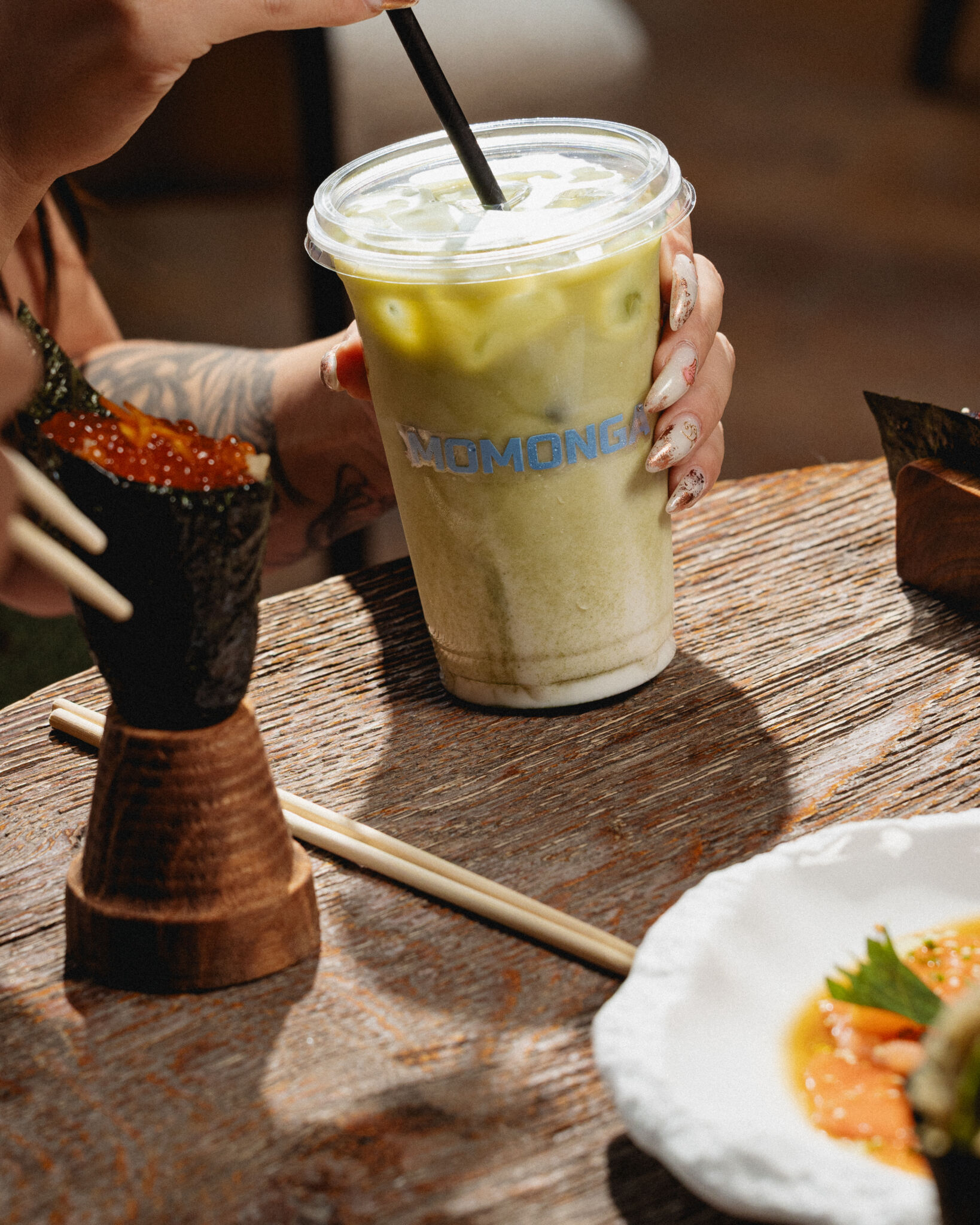
At the centre are hand rolls, cigars, and cones, assembled immediately before serving. The format creates a different rhythm: guests can drop in quickly, try several items, have a cocktail, beer, or bubble tea, and continue with their evening.
“You come in, grab a couple of hand rolls, a couple of mochi, have some cocktail or bubble tea — and off you go.” This is one of MOMONGA’s key ideas: to make Japanese cuisine part of the rhythm of the city rather than a separate formal occasion.
The menu is not intended to become an encyclopedia either. Alongside hand rolls, cigars, and cones, it will include salads, hot dishes, desserts, smashed cucumbers, mochi, and udon carbonara.
One of Dmitry’s principles is very simple: “If you come to MOMONGA, you absolutely have to order one open hand roll, one cigar, and one cone.”
This approach allows guests to discover the concept gradually, through several key formats rather than dozens of similar dishes.

Why Hand Rolls and Why Tashkent
MOMONGA is conceived as the first project in Tashkent built entirely around the hand roll format. Its goal is not simply to add another Japanese restaurant to the city, but to introduce audiences to a different way of experiencing Japanese cuisine.
A hand roll is relatively simple in construction: rice, nori, fish or another ingredient, and sauce. Yet precisely because of that simplicity, the quality of every component becomes especially noticeable.
For Dmitry, it is important that the product remains the main focus, with technique helping to reveal it rather than disguise it.

The concept is also not built around adapting Japanese cuisine as much as possible to local tastes. Some decisions do take the audience into account — for example, there is no major emphasis on raw fish, ceviche, or carpaccio. Overall, however, the team does not want to change the idea of the format simply to make it more familiar.
The task is different: to gradually make something unfamiliar understandable.
“Our task is not to adapt the new format to the guest’s habits, but to introduce the guest to a new format and make it understandable.”
This is why Tashkent is not simply the location of MOMONGA’s opening, but part of the concept itself. The city receives a format it has not had before, while the team gets the opportunity to build its own audience around it.
More Than Food: Music, Fashion, and MOMONGA PEOPLE
MOMONGA is not limited to gastronomy. An important part of the project is MOMONGA PEOPLE, alongside music, vinyl, fashion, and street culture.
For Dmitry, food and atmosphere should exist in roughly equal balance.
“We don’t want guests to just come in, sit there, eat in silence, and leave. But on the other hand, we don’t want people to come in, hang around, dance a little, and not order any food either.”

The ideal scenario is different: someone comes to eat, talks, listens to music, tries several dishes, stays longer, and eventually begins to see MOMONGA as more than simply a place for dinner.
That is why the project is aimed primarily at a young urban audience for whom not only the menu and service matter, but also the environment around the restaurant.
In that sense, MOMONGA looks more toward the atmosphere of contemporary Tokyo — lively, noisy, young, slightly chaotic, and constantly changing.
The Goal Is to Make Guests Fall in Love With the New Format
For the MOMONGA team, it is essential not simply to announce the hand roll format, but to make it clear and appealing to guests.
“Our task is to communicate it, explain it, and make people fall in love with it.”
That means working not only on the food, but also on the restaurant experience itself. Guests should quickly understand what to order, how the menu works, and why a hand roll is worth trying in this particular format.
In the future, the team wants hand rolls to become part of Tashkent’s everyday gastronomic culture — as natural as other popular urban food formats.
For that reason, MOMONGA is not so much following an existing trend as attempting to bring it into the city.

MOMONGA One Year From Now
When speaking about the future, Dmitry sums it up with one phrase he would like to hear from a guest:
“Damn, that’s great — open one in my neighbourhood.”
For the chef himself, the ideal sign of success would not be his constant presence in the restaurant, but quite the opposite: the team operating consistently without his daily involvement. If, in a year, the kitchen can function independently, the team understands the concept, and the quality remains at the same level, then MOMONGA will have succeeded in building the right system.
Most importantly, hand rolls should stop feeling new or unfamiliar to Tashkent and become a normal part of the city’s gastronomic landscape.
Perhaps that will be MOMONGA’s main achievement: not simply opening a new restaurant format, but gradually turning it into part of the city’s gastronomic culture.
MOMONGA — 22/5 Amir Temur Street