The Luxury of Less
After years of maximalism, micro-trends and clothes designed to compete for our attention, fashion is rediscovering the pleasure of restraint. Coastal minimalism offers something quieter — sculptural silhouettes, tactile fabrics and a new vision of femininity that feels less performed and more instinctive.
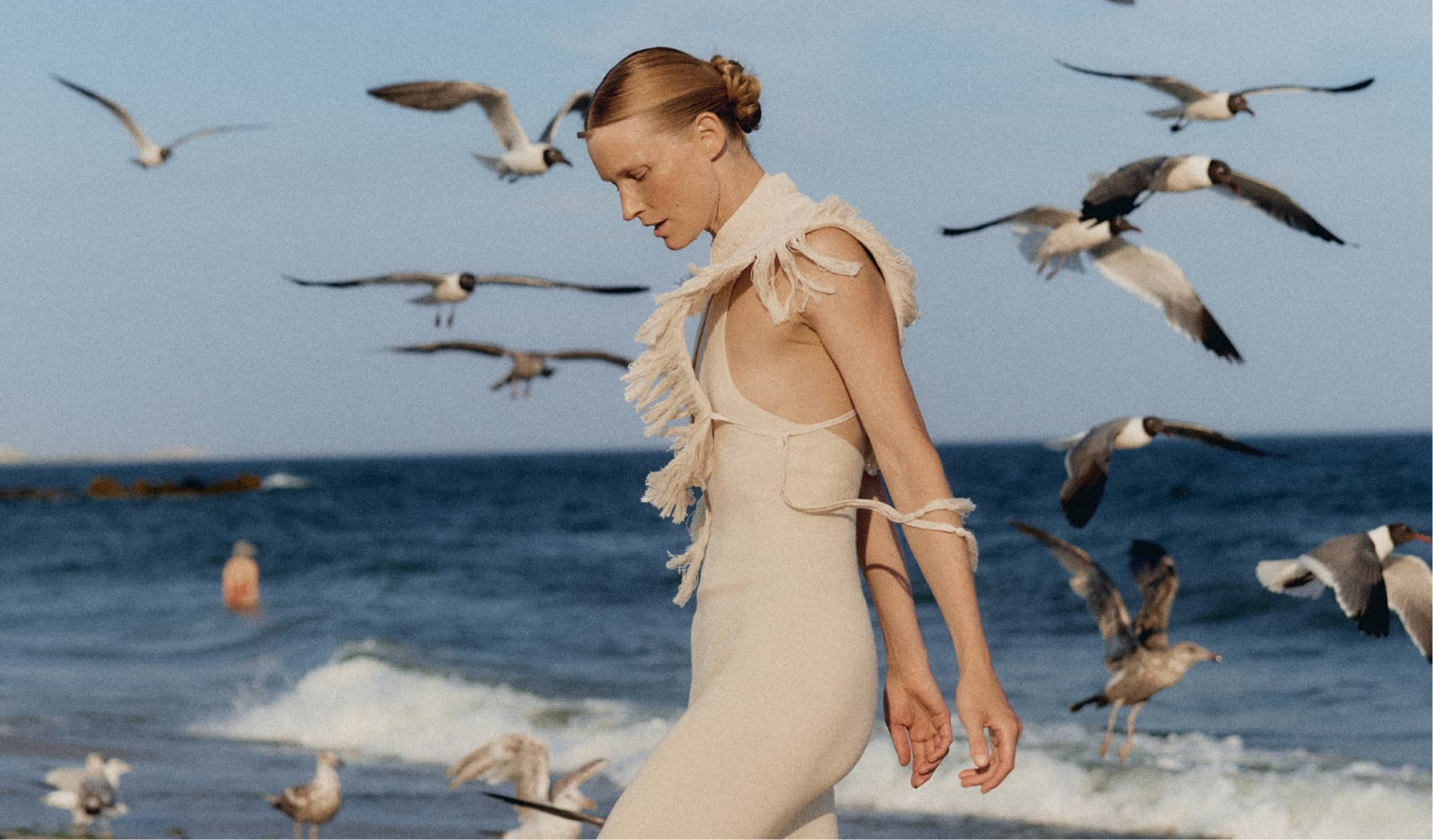
Fashion has had enough of the noise
For the past few years, getting dressed has sometimes felt like joining a conversation halfway through. There was always another micro-trend to understand, another viral piece to recognise, another aesthetic with its own name, mood board and very specific pair of shoes.

Dress Zivah
Fashion became extraordinarily good at capturing our attention, perhaps too good. Now something quieter is beginning to feel exciting again: clean silhouettes, natural textures, clothes that do not need an explanation, and the kind of dress that becomes interesting because of the way it moves in the wind rather than because it references five different eras at once.
That is the appeal of coastal minimalism, and despite what its name might suggest, it is about much more than wearing ivory by the sea. At its best, it represents a desire to strip fashion back to the things that make clothes compelling in the first place — proportion, texture, movement, body and mood.

Why fashion keeps returning to the sea
There is a reason the coast works so well as a backdrop for this new simplicity. The sea removes visual noise almost instantly, leaving the horizon, the light, the rocks and the movement of water to frame everything else.
Suddenly, every detail becomes more noticeable: the curve of a neckline, the weight of a knitted fabric, the way a long dress follows the body, the contrast between black and pale skin. Without much else competing for attention, clothes have to rely on their construction, and perhaps that is exactly what feels refreshing.

Dress LYSMO
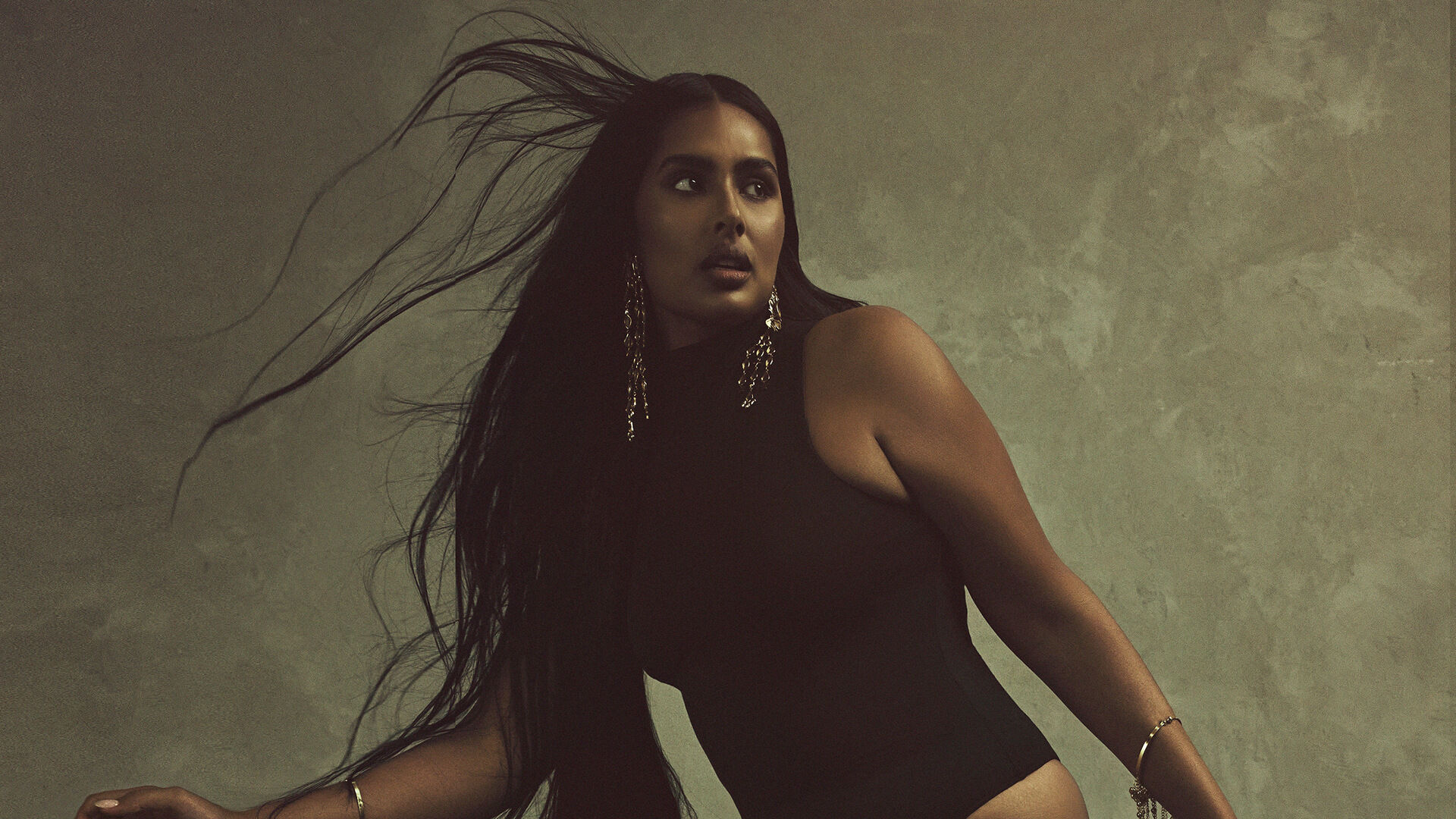
The palette is restrained — ivory, black, sand, washed neutrals — but the result is far from flat. Transparency, raw finishes, elongated lines and sculptural shapes create tension without decoration, while fabric responds to wind and skin becomes part of the composition.
Minimalism, then, stops being about absence and becomes about attention. It asks us not to look at more things, but to look more closely at what is already there.

Dress Zivah
A different kind of femininity
The most interesting part of this shift, however, is not the colour palette or the return of clean lines. It is what these clothes suggest about femininity and about how fashion is choosing to represent women now.
For a long time, femininity in fashion was made easy to recognise. It came coded in decoration — softness, embellishment, polish, obvious sensuality — but contemporary fashion is becoming far less interested in making women so immediately legible.

There is something much more compelling in that ambiguity. Femininity here can be severe and delicate at the same time, while a body can be exposed without being presented for approval.
A woman can look vulnerable without appearing fragile, and she can occupy space quietly while still dominating an image. The clothes do not construct a character around her; they leave enough room for her own presence to become the point.
Strength no longer needs to announce itself through hardness, just as femininity no longer has to be decorative. Softness can sit beside certainty, bare skin beside architectural shapes, fragility beside control — and none of those things need to cancel each other out.

Minimalism feels different this time
Of course, fashion has fallen in love with minimalism before. But this version feels noticeably removed from the immaculate, hyper-controlled aesthetic that once became shorthand for luxury.
It is less interested in perfection and more interested in sensation. It is warmer, stranger and much more tactile, appearing in fabrics that wrinkle, fray or move unpredictably, in styling that feels slightly undone and in beauty that allows skin to look like skin.

These are pieces that seem designed not simply to be photographed, but to be worn, touched and lived in. And it makes sense that this kind of fashion is becoming attractive now, when so much of what surrounds us is engineered to grab our attention as quickly as possible.
We spend so much time among images designed to stop our scroll that something without an obvious trick can suddenly feel genuinely luxurious. Space becomes luxurious, quiet becomes luxurious, and so does a garment that chooses to do one thing beautifully rather than trying to do everything at once.
Maybe that is the real idea behind the return to the elemental. It is not an argument for owning nothing or dressing exclusively in neutrals, but a reminder that fashion can still create emotion without overwhelming us.

The sea happens to be the perfect metaphor for it. It can be soft and forceful, peaceful and unpredictable, exposed and endless, and yet there is nothing particularly complicated about its beauty.
We never seem to tire of looking at it, perhaps because it never asks us to understand too much at once. Clothes can work in much the same way — leaving enough space for imagination, personality and feeling to enter.
In a moment defined by more — more images, more trends, more things competing to become the next thing — fashion’s most interesting move might simply be knowing when enough is enough. Sometimes the strongest statement is not adding another layer, reference or detail, but having the confidence to leave something out.

Dress Musera
Photographer&Creative Director: Alsu Leyman
Model: Hartje Andresen
MUAH: Alina So
Assistant: Kseniia Dolgova