Dmitrii Mitchenko: “Uzbekistan today is a true treasure trove of talent”
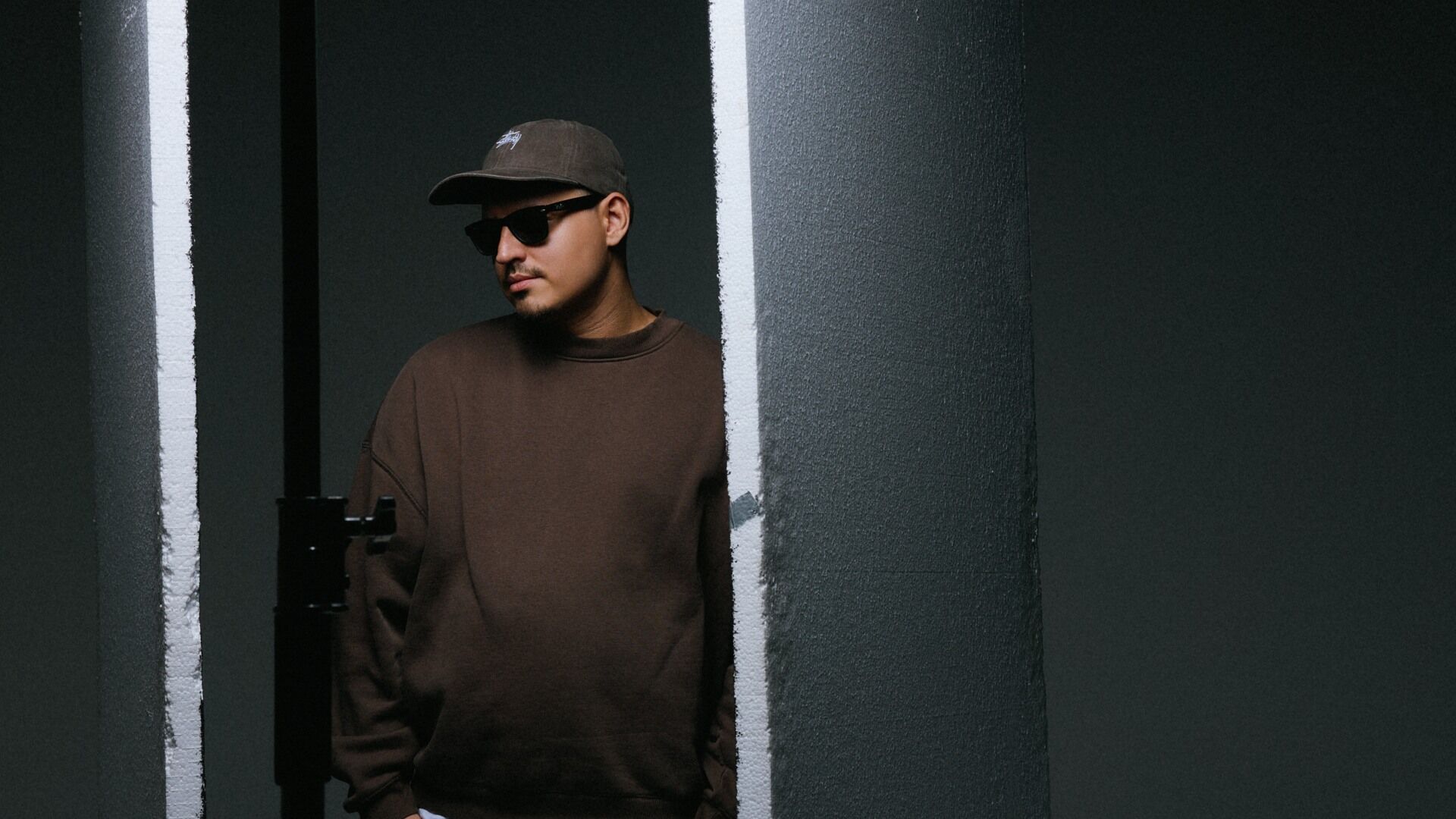
ELLE O’zbekiston spoke to its music editor Dima Mitch about his nineteen-year journey, how the magazine’s music desk supports local artists, and Object, his new international label and talent agency.
THE JOURNEY
You have been in the industry for nineteen years. Where do you date the beginning of your professional story from?
From my first performance and my first professional steps. I started playing when all I had was faith in a dream and the goals I set myself. For nineteen years, I have been working towards those goals through transformation and experience. I love everything connected with music and everything that happens around it: the artists, promotion, the stage.
Over time, I realised I could pass my experience on to others: share connections, contacts and a vision. My own career is still very important to me. But today, helping people shape their own paths gives me just as much pleasure.
When did you become interested in developing other artists as well as yourself?
Everyone has a turning point. You realise you have a lot of energy, and you want to share it. I am convinced this only happens once you have worked through your ego and truly grown. As I like to say, a good footballer can always become a good coach.
Over nineteen years, I have built strong connections, made mistakes, learned the hard way and gained experience. I look at the young people who come to me, see that they could repeat those same mistakes, and want to offer advice and help.
Of course, today it is also a business. We attract investment into different projects and artists, help them build careers, and work with studios around the world. Essentially, it is talent management in music. And we are going deeper: one person asks us to produce an album, another a release, while someone else comes to me ready to entrust me with their career. Then we develop the strategy and tactics together. You tackle creative and business challenges in parallel and look for collaborations. That is where real creativity comes from.
You have performed in more than 20 countries. Which stage has stayed with you the most?
I have played in Portugal, Spain, Sri Lanka, Thailand, Malaysia and many other countries. Wherever I go, I feel the same thing: music is an enormous global community of like-minded people. Every country has its own community, and you immediately become part of it. In Istanbul, Bali, Lisbon and Madrid, I have friends who throw parties, make music and have amazing studios. I met almost everyone close to me through music.
Music has also given me the world: other countries, their food, culture and nature.
As for an international stage, it is Cafe del Mar in Phuket, one of Asia’s best clubs and one of the world’s top 100. The club has an incredible team, its residents are my friends, and I am always happy to see them. It is a place where magic happens, and it was there that we staged our Asiatika project. You look at the artists who have played that stage and realise how far you have come since you were eighteen, when all this was just the dream of a young guy from a small town.

THE INDUSTRY AND TALENT
How has the music industry changed over the past ten years?
A lot of people say the industry is going downhill. It has certainly moved away from the traditional model. Today, music is largely about influence, and in my view, the music itself risks taking a back seat. What matters is your social media presence, how many followers you have and how you manage your pages.
For many people, this is a problem. A good producer or musician is not necessarily good at making beautiful posts. That is why I always tell the people I work with: today, simply making music is not enough, even though it is the most important part. My view is this: music comes first, personal branding and social media come second, and they need to work together.
Everyone is debating this now. Artists with large audiences enter the market, sometimes lacking professionalism, yet they fill venues. That is the reality: an artist becomes a brand, and everyone will have to learn how to do that.
At the same time, professionalism is fundamental to me. Every track carries a message, from a declaration of love to a broken heart. I am always puzzled when I see an artist playing a track about heartbreak while jumping around happily to it. You need to understand what you are playing and what emotion you are conveying, because it is always an exchange of energy. Unfortunately, there is not enough of that today.
But music still comes first. That is the True Story.

What role does talent itself play in this reality?
I believe that today an artist should enter the industry with a strong team that manages them and handles these tasks. Artists should not have to do their own posting. They need a marketing strategy, a strong brief and a team that understands the artist’s image, where they want to go and what tools are available to get them there.
Of course, some people discover an aptitude, learn and build their personal brands themselves, and that works too. But my main point is this: strong talent needs a strong team that can bring it into the spotlight and develop it.
Did you arrive at that conclusion through your own experience?
Yes. I have come a long way as an artist myself, and I know from experience how difficult it is to establish a presence on social media. You need to learn how or bring in experts. But it is better when an artist has someone alongside them who manages their social media. We artists want to focus on creativity without being distracted by social media.
Usually, it goes like this: you have good music and a small audience, and you think you will write a huge hit and everything will change. That does happen, but a hit cannot be written to order. Behind it are many factors and the work of entire teams, from production to promotion. In the moment, you do not understand why no one hears you when the music is great. It feels like firing into the void. That is why you need a team to gather all the information about you and propose a strategy.

BASANTA MUSIC
You founded Basanta Music in Kharkiv in 2019. How did it all begin?
Basanta means “spring” in Sanskrit. It is the season when everything blossoms, fertile ground for new beginnings and growth. I apply that image to artists: you water them, and they bloom. That meaning was built into the company from the very beginning.
Then we started releasing music, launched labels, and created parties that people still talk about, holding them in Asia and Europe. We established a production studio and a DJ school, and the most interesting thing is that they were completely free for young musicians. We arrived at a principle: we would not charge artists to record their music. Investment made this possible. We developed strong pitches, attracted investment into the music industry and secured support from the city authorities. That gave us the opportunity to let young people record their work and bring in accomplished musicians.
When we opened, we did not yet fully understand how everything would work. Today, we have a complete picture: we know what artists need, what challenges they face and what connections they need in music. Today, Basanta Music encompasses labels, events, an educational platform, talent management and partner production studios around the world.
Whenever I show our projects in Istanbul, Lisbon or Thailand, the reaction is always the same: “Wow.”
Who do you feel you are today: a DJ, producer, entrepreneur, mentor or curator?
I used to think everything revolved around my career as an artist. You set goals and go through highs and setbacks. Now I understand that every artist should have a goal, but it must not become an obsession. That is very important. When a goal becomes an obsession, you close yourself off to many other directions that could make you stronger and bring you joy.
So today I am ELLE’s music editor, a mentor, the owner of a music business and labels, and someone who builds artists’ careers. And, of course, a touring artist. Music is being made, the artists’ careers are taking shape, and the events business is growing: I run a company, perform and create events on the other side of the world. All these roles fit together naturally within me. I love music so much that I also love everything that happens around it.

MUSIC, FASHION AND ELLE
Why is the connection between music and fashion becoming increasingly important?
Look at Keinemusik, Black Coffee and Peggy Gou. For them, that connection is not something you read between the lines; it is front and centre. We know how Black Coffee puts his looks together. Peggy Gou has appeared on the covers of many magazines. Keinemusik collaborate with brands.
Today’s major DJs are closely connected to fashion. They play at fashion weeks, Formula 1 events and society parties, and compose music for the fashion industry.
The two industries are also very similar: both are built around distinctive personalities. The modelling business operates in the same way as the business of musicians and DJs: management, contracts, sometimes harsh ones, with many contentious points. You want to change those things to give creativity more freedom.
You are the music editor of ELLE O’zbekiston. Why does a traditional fashion publication need a dedicated music division?
The music desk is a new direction within the ELLE ecosystem, and it began right here in Uzbekistan. It was an experiment, and it has fully justified itself. What matters to me is the opportunity to develop artists, write about them and introduce Uzbek talent to the world through ELLE’s global brand. We have held many events and published many interviews, filtering everything through ELLE’s DNA and through music. I see the momentum and growth that this kind of media platform gives artists.
The second reason is Uzbekistan itself. The country is experiencing a powerful creative upswing. You step outside and meet outstanding musicians, photographers, designers and video production professionals. Uzbekistan today is a true treasure trove of talent. I have travelled all over the world, and I can say it is one of the most promising countries for the creative industry, with great parties and events. Excellent events are taking place here now: Close Friends, the Sublimation festival and the new Muzone festival, which brings in artists from around the world. Wonderful people, incredible hospitality, and affordable, strong, professional marketing and video production. The state also supports the creative industries here.

Can a publication of ELLE’s stature help a local artist reach an international audience?
Yes, and that is exactly what the music desk does. Every month, we release playlists by local artists and DJs. They showcase their sound, and local venues are usually the first to take notice.
I have noticed that artists always add an ELLE interview or playlist to their portfolios. When you arrive in any country and say that ELLE has written about you, it works: the brand has an excellent global reputation. It is a step towards visibility and a strong reason for media attention.
Which music desk projects are you most proud of?
We recently published an interview with Svetlana Loboda. Working with Natella Krapivina, one of the key figures in the CIS music industry, was a very interesting experience. It matters to us that people like them trust us.
We have spoken with international DJs. La Santa from Spain told us about her journey. Elif from Turkey, who has her own labels and parties around the world, talked about how a girl from Turkey broke into electronic music and conquered that scene.
But the desk’s greatest source of pride is the local scene. We give young Tashkent artists a platform: RAY, MONE, ZARAYA and others have put together playlists for ELLE O’zbekiston and given interviews, and we have held launch parties with them. It matters to me that these names are heard beyond Tashkent, and the ELLE brand helps bring them to audiences far beyond the country.
The official Visa Fashion Week afterparty was another particularly important milestone for us: we brought our musical taste together with fashion week in Uzbekistan. We have also collaborated with strong local and international brands.

What are the music desk’s plans for the future?
We want to broaden the format. At some point, we realised we had limited ourselves to electronic music, so there will be much more from the pop industry and musicians who engage with culture.
For me, the top priority is not chasing big names. I want to give young artists a platform where they can explain why they make music, talk about the paths they have taken and share their stories. Supporting the local scene is what matters most.
Second, of course, are global stars. My dream is for Peggy Gou to appear on our digital cover or give an interview for readers in Uzbekistan. We are working towards that.
And we want to invite well-known figures from the music business to share their thoughts, news and journeys with Uzbekistan.
OBJECT
What do artists from Uzbekistan and Central Asia lack most today when it comes to an international breakthrough?
Many still work by the old rules: an artist must be tied down by a contract. I take a different approach because the world is changing. You cannot take away an artist’s creative work and their name. They should want to be there with you, with the label and with the community.
The most important thing now is to give artists freedom. A free artist is much more productive and interesting. That is why now is the time for new approaches to creativity in Uzbekistan. The country has everything it needs to make itself heard and take its place on the world’s musical map.

Is that principle also at the heart of Object, your new international project?
Yes, it is the foundation. I have worked with leaders in the music industry and learned a great deal from them. I saw their approach from the inside: I agreed with some things and disagreed with others. And I realised that Uzbekistan now has the right conditions to build a strong creative community for young people. That is how Object came about.
Object is an international label and talent agency with offices in Europe, Asia and, of course, here in Uzbekistan. We work without an overly strict selection process. Our job is to help artists become visible and grow: release their music, create strong cover artwork together, work with the media and hold label events.
It is a community where no one takes away anyone’s rights. You stay because you want to: you are interested, and you are surrounded by like-minded people. Within it, you can develop your creative work and share it through partners and the media.
Object’s main mission is to bring strong artists together and help them grow. We have many ways to do that and extensive experience. I spent about a year developing this project. There were fears and doubts; I did not know how to bring it to life. Then two months ago, I realised: I am ready, the artists are ready, the team is ready. Let’s go.

TEN YEARS FROM NOW
If you had to inspire young artists in Uzbekistan in one or two sentences, what would you say?
Keep going and believe in your dream. Set goals, but do not turn them into an obsession: enjoy the journey, and once you begin to take pleasure in the journey itself, doors will start opening and goals will be reached.
Imagine we meet again in ten years. What would need to happen for you to say, “I did what I wanted to do in music”?
I want these young people to do what they love, achieve results and not give up. I want to see their eyes light up and their smiles in photographs from their concerts and releases. To listen to their music and see how many strong albums and performances they have created.
And I want them to remember that perhaps they once read this interview and realised: he is just like us, he has travelled this path, offered advice, given direction and helped us keep going. Then I will be able to say I did something important.
When I teach DJing, I always tell my students: I am not teaching you DJing, and I am not teaching you music. I am teaching you to find the music within yourselves and begin sharing it.