THE FORMULA OF EMOTION
Yevgeniy Yefimov, brand chef of SUN Group's bar division, on the concepts reshaping modern bar culture.
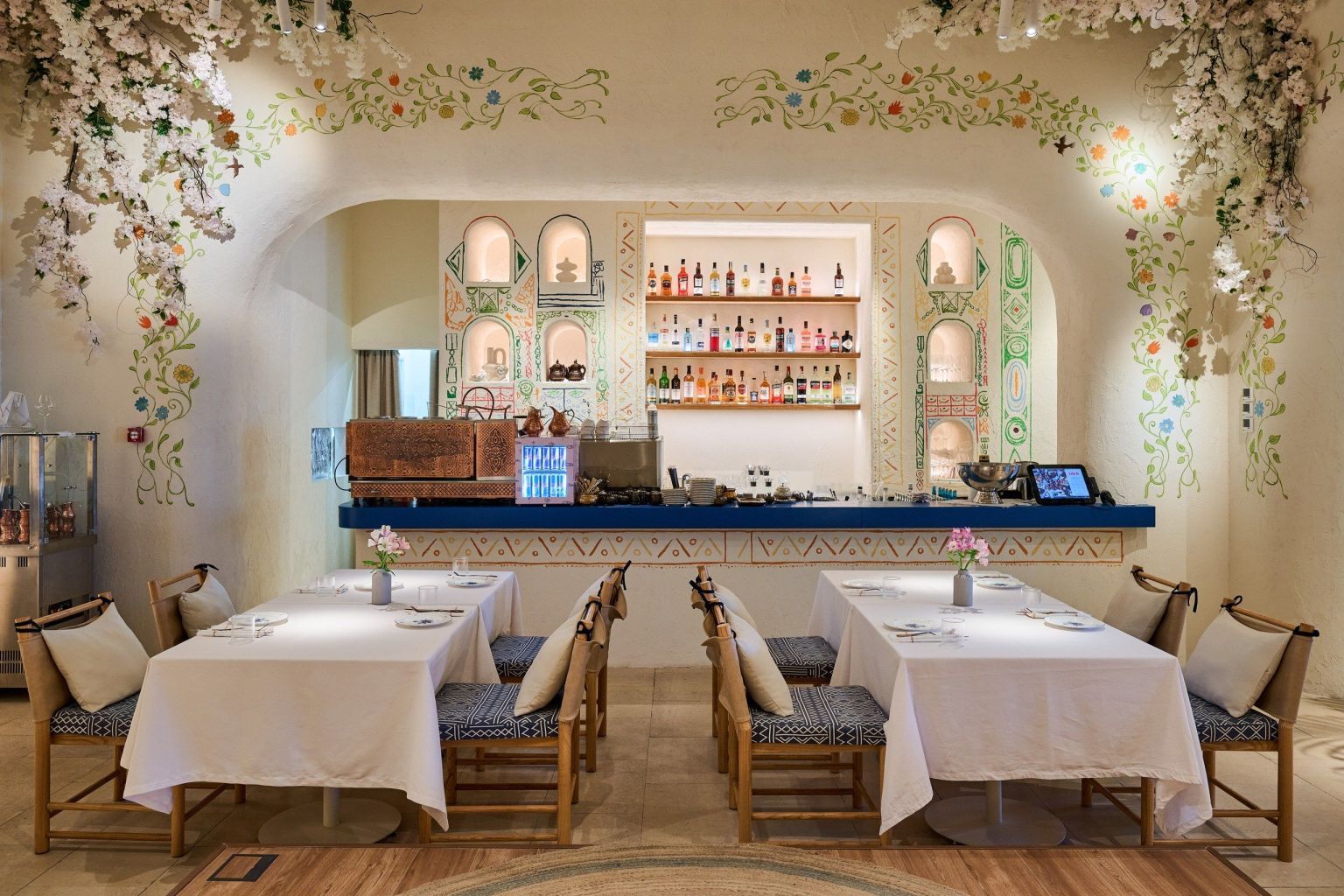
A restaurant today is no longer just about the kitchen, the interior, and the service. Guests come for a complete experience: atmosphere, story, detail, and the emotion that stays with them after the evening ends. That is why, in SUN Group's current projects, the bar has become part of the restaurant's overall concept, extending it through presentation, storytelling, visual language, and the way guests are drawn into the experience.
“People don’t remember the taste. They remember the emotion.”
For Yevgeniy Yefimov, brand chef of SUN Group's bar division, this idea has become the foundation of his professional approach. His path in the restaurant industry began in Russia, and he joined SUN Group six years ago. Since then he has taken part in openings in seven countries. He describes the result not as a list of achievements, but as the chance to grow alongside the company.
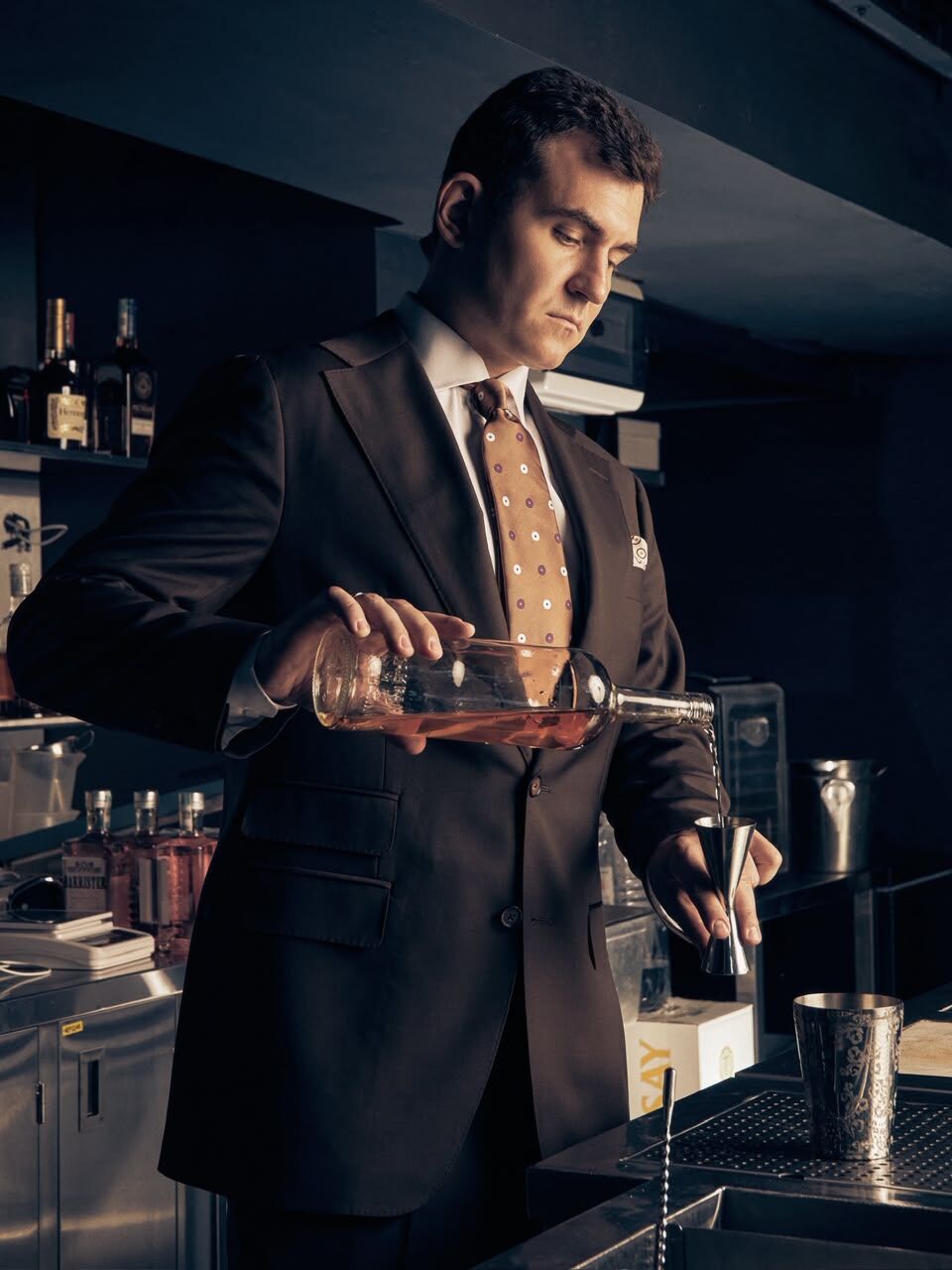
“When I joined the company, I was a strong bar manager at a single restaurant. Today I have dozens of project openings across seven countries behind me. That kind of experience was only possible because of Sun Group.”
Today his work goes far beyond developing individual drinks. Yevgeniy is involved in openings, works on concepts, presentation, storytelling, and teams. What matters to him is that the bar never exists apart from the restaurant, but continues its idea.
That is precisely why the bar direction develops differently in every SUN Group project. It is not meant to stand apart from the kitchen and the space; instead, it becomes an extension of their idea.
This approach is clearly visible across SUN Group's different projects. At Salama, where Moroccan, Central Asian, and Southern European motifs come together, the bar concept is built as a gastronomic journey. Eight directions each carry their own stories and aromatic associations, and getting acquainted with the menu begins not only with a visual choice but with scent. Elixirs based on natural herbs became another part of this idea, an extension of the restaurant's gastronomy.
At NIKA, the same principle unfolds through an entirely different cultural code. The restaurant's Greek philosophy continues in the bar menu through ancient mythology, architecture, and traditions of hospitality: the Parthenon, Zeus, the amphora, the skyphos, and other images become part of the storytelling. Here the bar menu does not exist for its own sake, but helps guests read the character of the space more deeply.
For Yevgeniy, the difference between such projects is fundamental: you cannot simply take one successful concept and transplant it into another restaurant. Every project demands its own language and its own scenario for engaging the guest.

“My job is to support marketing, in a sense, so that the drinks sell themselves through storytelling, appearance, and the look of the cocktail menu itself.”
Being able to compare different approaches now helps him work on SUN Group projects across different countries, not by copying ready-made solutions, but by adapting them to a specific space and audience.
In his view, local context is becoming increasingly important for restaurants in Central Asia. There is a growing interest here in lighter, more conscious formats, non-alcoholic drinks, reduced sugar, and products tied to a healthy lifestyle. Yevgeniy believes these directions will become increasingly prominent in the market over the coming years.
“I think that before too long, mocktails, the non-alcoholic ones, will become very popular here. I think that will be a major trend.”
This is especially interesting for SUN Group, since the holding operates several different restaurant concepts at once. Instead of a universal approach, each project gets its own character through the kitchen, interior, service, and bar component. That is why one restaurant might speak to guests through a journey between cultures, another through ancient mythology, and a third through an entirely different visual or gastronomic code.
And the brand chef's task within this system is to learn, each time, to start with a blank page.
Behind such a busy professional schedule, ordinary life still goes on. At the time of the interview, Yevgeniy was on another long business trip: over the course of a few months he had managed to visit Almaty, Tashkent, Astana, and Russia.
Yevgeniy admits he does not have an ideal work-life balance. Instead, he tries to be deliberate about the small amount of free time he has left after work.

“You need to surround yourself with great people, the kind who don’t drain your energy but actually fill you up.”
This thought eventually leads back to the restaurant. Behind every concept are people who, every day, turn an idea into a real experience for the guest. That is why the modern bar exists less and less on its own: it becomes part of the restaurant's language, its story, and its atmosphere.
At Salama, this story is built around a journey between cultures. At NIKA, around Greek heritage and ancient imagery. Other SUN Group projects develop their own languages and scenarios for engaging guests.
And perhaps this is exactly where Yevgeniy Yefimov's formula of emotion at Sun Group lies: not creating a universal product, but each time searching for the form that best tells the story of a particular place. Because in the end, guests remember not only the taste, they remember the feeling they carry away with them.

SUN Group is one of Uzbekistan's leading restaurant holdings, led by international restaurateur Alexander Orlov, currently bringing together the projects Cucucina, TKX, Manana, Salama, and Nika, and shaping the country's modern gastronomic culture. The holding's restaurants regularly receive recognition from the professional community: Cucucina was named “Discovery of the Year,” TKX won the 2024 Meal & Drinks Choice Award in the “Best Continental Cuisine Venue” category, and Salama ranked among Uzbekistan's top 20 restaurants according to the ABBA Awards.