Martyn Roberts: “I’d Like to See Uzbekistan Through the Designer’s Own Eyes”
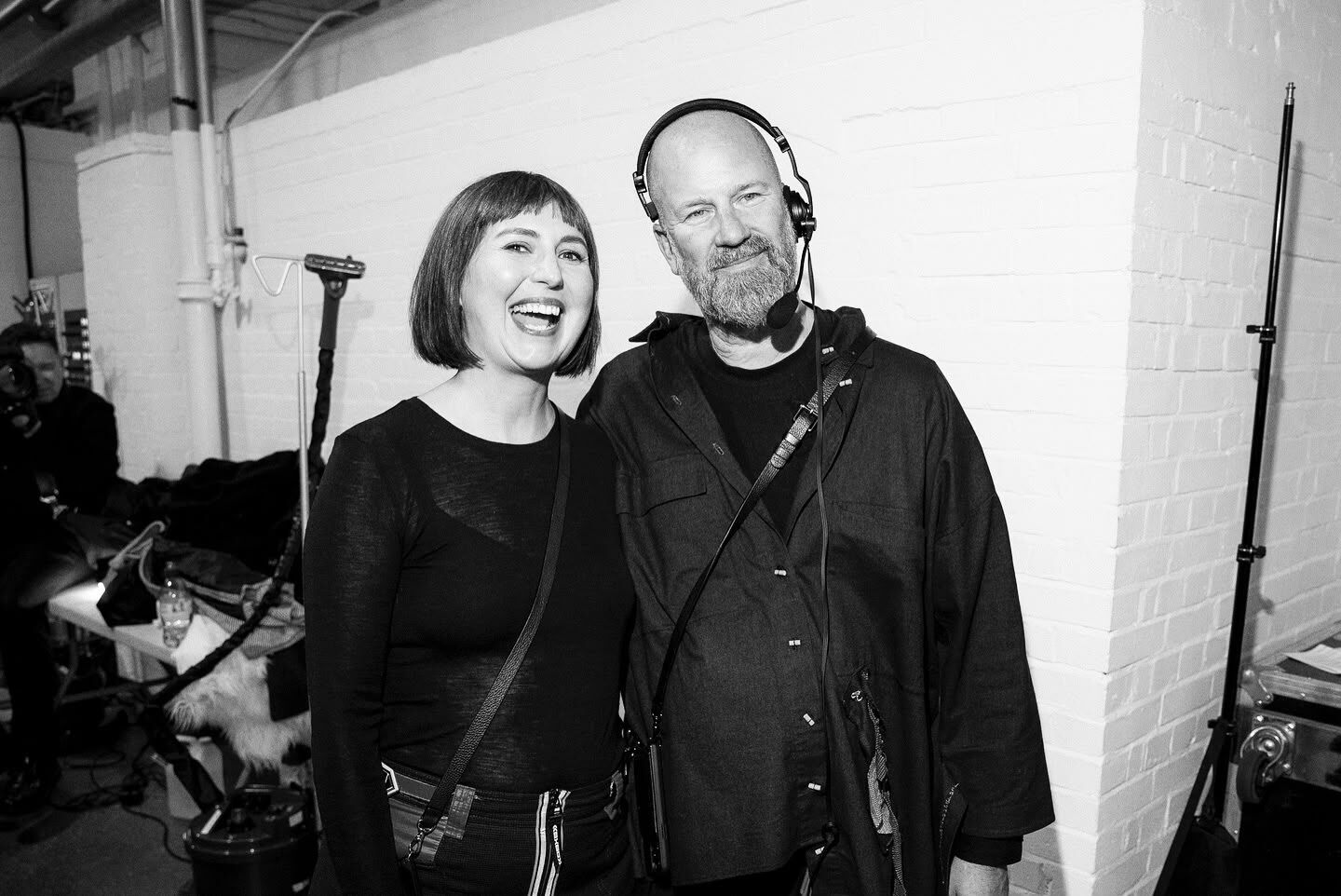
A beautiful collection may be enough to get a designer noticed. But what makes us remember them a season later? Martyn Roberts, founder of Fashion Scout, has spent the past twenty years discovering new names in fashion. Among the designers the platform supported early in their careers were Iris van Herpen and David Koma. Looking back, Roberts recalls that even then, each already had a creative language of their own.
To mark Fashion Scout’s 20th anniversary, ELLE Uzbekistan spoke with Martyn about how to recognise talent, what separates a strong brand from a striking collection, and why designers from Uzbekistan should offer the world their own vision of their country.

Fashion Scout turns twenty this year. Looking back to the very beginning, what has changed most for young designers trying to break into the industry today?
Twenty years ago, the routes into the industry were much clearer. A young designer could focus on creating a strong collection and then rely on buyers, wholesale and fashion media to help build the business.
Today, designers have incredible opportunities to reach a global audience, but that freedom comes with new challenges. They are expected to understand communications, e-commerce, production, finance and distribution, often while they are still figuring out who they are creatively.
The paradox is that maintaining creative independence today requires a better understanding of business than ever before. Designers need commercial knowledge and well-established processes to turn creativity into a viable business. At the same time, they need the confidence not to let short-term market demands dictate their creative direction.
You’ve seen many designers at the very beginning of their careers. What makes you pay attention to someone? Is there something you tend to notice almost immediately?
I look for a point of view. Technical skills can be developed, and a business can be built. What interests me is whether someone has something they genuinely want to say.
Often, you can see it surprisingly quickly. It might be in a silhouette, the way they work with materials, an unexpected proportion, or simply the way they talk about their work. You sense a connection between the person and what they create.
I don’t necessarily need to understand everything immediately. Sometimes the most interesting work makes you stop precisely because you haven’t quite figured it out yet. That’s when you want to see more.

...Some of the designers Fashion Scout supported early in their careers went on to achieve major international success. Could you already see something special in them at the time?
Yes, although it’s impossible to predict how someone’s career will unfold.
When I think back to designers such as Iris van Herpen and David Koma, what stands out is that they already had a very distinct creative language. David had an extraordinary understanding of the body and silhouette. Iris combined craftsmanship, technology and experimentation in a way that felt genuinely new.
They weren’t asking themselves, “What does fashion want from me?” They were offering their own vision.
The designers who ultimately have the greatest impact don’t simply become visible participants in the conversation around fashion. They are able to change the conversation itself.
Today, we see an enormous amount of fashion, particularly on social media. What still feels genuinely original to you?
We live in an attention economy, and fashion has become exceptionally good at creating moments that travel around the world almost instantly. A model falling on the runway, robots, elaborate sets, performance, a provocative celebrity appearance. Within minutes, those images can be everywhere.
Some of these moments are genuinely brilliant. Fashion has always understood the power of theatre and provocation, and a show should create emotion. But virality and originality are not the same thing.
What matters to me is whether the spectacle develops the creative idea or replaces it. I still come back to the clothes and the thinking behind them. Does the designer have a point of view that exists beyond that spectacular moment?
Originality today doesn’t necessarily mean inventing something no one has ever seen before. I’m increasingly interested in individuality: how a designer turns their culture, experiences, interests or particular way of seeing the world into something that another person would be unlikely to create.
The best fashion show amplifies an idea rather than compensating for the absence of one. In an industry where the competition for attention is becoming increasingly intense, the real challenge isn’t simply to make people look. It’s to give them a reason to keep following you once the show is over.
Is there a difference between someone who can create a beautiful collection and someone who can build a strong brand? What do you look at beyond the clothes?
Absolutely. A strong collection can attract attention. A strong brand has to sustain that interest and evolve consistently.
Beyond the clothes, I look for clarity. Does the designer understand who they are, who their potential customer is and why that customer would want to come back? Then comes the less glamorous side of the business: pricing, production, cash flow, deliveries, business relationships and the ability to think beyond the next season.
Entrepreneurial energy is also important to me. Designers who move forward tend to be curious, collaborative and open to new opportunities. At the same time, they don’t allow themselves to be distracted by every offer that comes their way.
Talent can open the door. Turning it into sustained momentum is an entirely different skill....

New Inn Yard, London 19th September 2026. A model walks at the Fashion Scout - Ones to Watch Runway Show. ©Chris Yates/ Chris Yates Media
...What is one mistake you see young designers making again and again?
They try to look established before they have understood what makes them different.
The pressure can be enormous. It can feel as though you need to have the perfect campaign, flawless social media, retail partners, collaborations and all the outward signs of a successful brand from the very beginning. You can become so absorbed in creating that image that you never get around to building the foundation underneath it.
I’m far more interested in seeing a young designer confidently develop one extraordinary idea than ten ideas aimed at ten different audiences. First, you need to understand who you are. Then you build the entire system around that.
This season, many designers have looked to their own culture, craftsmanship and personal histories. Do you think the new generation is becoming increasingly interested in its roots?
Yes. Some of the most interesting work today is being created by designers who no longer believe they need to smooth away their individuality in order to participate in the international fashion industry.
But a cultural reference alone doesn’t make the work interesting. The question is what you do with it.
Heritage should be a living material, not a costume. I’m interested when designers reinterpret tradition, collaborate with artisans, shift its context or use it to speak about contemporary life.
That also comes with responsibility. If you work with traditional craft, you need to think about the people who hold that knowledge, who benefits economically from its use, and whether future generations will still be able to earn a living from that work. Preserving craft is important, but for it to remain alive, it also needs to be allowed to evolve.

This subject is particularly close to me because I work with Uzbekistan. Central Asia has an extraordinarily rich history of textiles and craftsmanship, yet many of the region’s contemporary designers are still little known beyond it. What would make you pay attention to a designer from Uzbekistan?
I wouldn’t want an Uzbek designer to show me what they imagine London, Milan or Paris wants Uzbekistan to look like. I’d like to see Uzbekistan through the designer’s own eyes.
Central Asia has extraordinary textile and craft traditions.
But to become interesting to an international audience, it isn’t enough simply to apply traditional techniques to contemporary clothing. I would look for a designer who understands that heritage so deeply that they can question it, reinterpret it and make it part of a genuinely contemporary statement.
I also want to understand how the clothes are made: who creates them, how traditional knowledge is preserved, how artisans are compensated, and whether the business can grow without destroying the very thing that makes it special.
The most interesting proposition isn’t, “This is fashion from Uzbekistan.” It is, “This is a designer the international fashion industry needs to know, and one who could only have emerged from Uzbekistan.”...
After twenty years of working with emerging talent, what still inspires you to keep looking for the next designer?
The fact that you never know where the next extraordinary idea will come from.
You might assume that after twenty years of doing this, you become much more certain about who you’re looking for. In some ways, the opposite has happened to me. The more designers I’ve met and the more countries we’ve worked in, the more I’ve wanted to be surprised.
This season is a perfect example. Our Beyond Limits: Polish Visionaries exhibition introduced a new generation of Polish designers and creatives in London. Many of their perspectives have been shaped by their own culture, communities and creative environments. For the past five years, we have also been working with designers through Fashion Scout Armenia, and recently we travelled to Ethiopia and Zimbabwe with the Creative DNA programme.
These experiences constantly remind me of one thing: talent has never been the exclusive privilege of the established fashion capitals. What was concentrated there were opportunity and attention. Extraordinary creative people exist everywhere. The possibility of introducing them to the wider industry is what continues to excite me.
There are still those moments when you see someone’s work for the first time and recognise something special in it. Perhaps the idea is still raw, perhaps the business isn’t fully developed yet, but one thing is already completely clear: it belongs to that person.
Fashion changes when someone sees the world in such a distinctive way that they are able to offer another path. And twenty years on, I still want to be there when that happens.