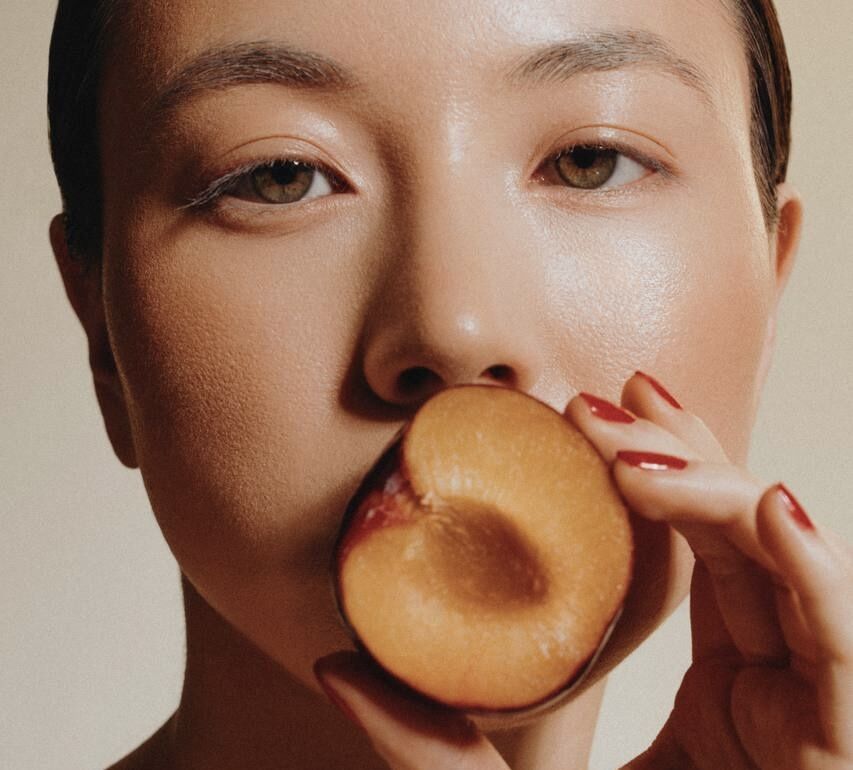
Sexologist Vladislava Evtushenko on Desire, Stress and Intimacy
Today, intimacy and sexuality are discussed more openly than ever, yet understanding our own desires can still be surprisingly difficult.

Where do socially imposed ideas about sexuality end and genuine self-understanding begin? Why, even in long-term relationships, can it be so difficult to tell a partner what we truly want? And how deeply does our emotional state shape our intimate lives?
ELLE Uzbekistan spoke with practising sexologist and psychologist Vladislava Evtushenko about sexual compatibility, female desire, stress, vulnerability and the myths that continue to shape the way we experience intimacy.

Today, we talk about sexuality far more openly than we did just a few years ago. In your view, which myths remain the most widespread, and how do they prevent people from building healthy relationships with themselves and their partners?
“One of the biggest myths is that if two people are sexually compatible, everything will work perfectly from the start — and if something doesn’t feel right, it means you’re with the wrong person.” Imagine how disappointing that belief can become if you never stop to look beneath the surface and understand what is actually happening.
Each of us has our own individual characteristics, shaped by our psychosexual development and our lived experience. Together, these form our behavioural patterns. We enter a new relationship assuming that if we repeat a sexual scenario that worked with a previous partner, the new partner will enjoy it too. But in reality, things can be very different.
A man might be convinced that his partner enjoys oral sex because his previous partner did, so he begins every sexual encounter that way. She puts up with it but says nothing because she doesn’t want to hurt his feelings — after all, he is trying. What remains unspoken can be just as damaging. In any relationship, both emotionally and sexually, we need to discover what works for us and learn how to adapt to one another.
Your work encompasses not only sexuality but also relationship psychology. How closely is a person’s emotional state connected to the quality of their intimate life?
They are directly connected. This is particularly true for women, for whom sex often begins long before the sexual act itself: with how we wake up, how someone says good morning to us, the way they look at us, the way they hold us and how we communicate throughout the day.
What happens when we feel hurt and something remains unresolved between us?
Here is an example from my practice. A man came to me because he was concerned about sexual dissatisfaction, specifically the lack of sex with his wife. He had been attributing it to age-related changes, menopause and stress, and was already considering simply accepting the situation. In reality, however, his wife had been so deeply hurt by the things he had said during their arguments — she remembered every word — that she withdrew emotionally and her sexual desire disappeared.

Many women put off seeing a sexologist for years. What concerns do they most often come to you with, and what tends to be the most unexpected discovery during the process?
Most women come to me when the situation has already reached a critical point: they are on the verge of being unfaithful, they no longer desire their partner, their frustration with an unsatisfying sex life has begun to affect their overall quality of life, or they are facing difficulties they are no longer prepared to tolerate.
For many of my clients, the biggest revelation is realising that pleasure and orgasm are also, to some extent, a woman’s own responsibility. We often place that responsibility entirely on men and say things like, “He’s a bad lover.”
Very few women consider that they can actually guide their partner. And this brings us to the central issue: many simply don’t know how. They don’t know what they enjoy, they have little awareness of their own bodies, they don’t explore their sexuality or masturbate, and some don’t even know what their own genitals look like.
This is where sex-therapy exercises can become useful.
Over the years, you must have noticed certain recurring patterns in your practice. What mistakes do couples make most often, even when they genuinely love each other?
First, they normalise sexual differences — differences in preferences, libido, forms of stimulation and so on. Not in the sense of, “We’re different, so let’s work out what works for both of us,” but rather, “It’s fine, we’ll get used to it.”
Second, there is often a lack of open, honest communication. Talking about sex and desire remains difficult for many people, leaving partners to guess what the other person wants, how they want it and what actually feels good to them....

There is an enormous amount of information about sex on social media today. Do you think this genuinely improves sexual literacy, or does it create new insecurities and unrealistic expectations?
Simply coming across information online doesn’t mean you can apply it to your own life, identify the underlying cause of a problem or make meaningful changes. Sometimes a 60-minute session with a specialist who can help you unpack issues that have accumulated over years is far more effective.
People who discuss adult topics online generally either work professionally in sexual health and education or share their own experiences and opinions. Both have a right to exist. The question is how an individual interprets and internalises what they see and hear. A psychological complex is, essentially, a form of maladaptation.
What does create unrealistic expectations is pornography. It is consumed in huge quantities and presents an idealised, physiologically unrealistic version of sex. For people who find it difficult to become aroused without visual stimulation, I recommend choosing amateur or “home” content, where what they see is generally closer to real-life sex.
You spent many years working in the fashion industry and continue to collaborate on fashion projects. How has that experience shaped your understanding of femininity, attractiveness and sexuality? Can style become a tool for building inner confidence?
Working in fashion gave me an extraordinary opportunity for self-discovery. Over 12 years, I tried on so many different identities that it became impossible not to understand what my own authentic expression of femininity actually looks like.
Feeling attractive and sexual begins, first and foremost, with feeling that way within yourself, although what you wear can certainly play an important role. Experimenting with style showed me that my own femininity is very different from the clichéd version we are often taught to imagine.
For me, it isn’t about dresses or heels, perfect hair and make-up, graceful movements or feline mannerisms. It is about energy, inner strength and the masculine side of myself that has developed so powerfully over the years — something I now enjoy expressing through the way I dress.
If clothing can help you discover a more authentic version of yourself and build confidence in the process, then it is absolutely worth using it as a tool.

You often speak about the importance of vulnerability in relationships. Why is it so difficult for people to talk openly about their desires and needs, even in long-term relationships?
When women with anorgasmia come to me, one of the first things we do is identify the possible reasons they are unable to reach orgasm. One of those reasons can be a lack of positive sexual experiences.
People who have never experienced the intimacy of a truly deep connection may simply not know how rewarding it can be to be that open with another person. For some, vulnerability is difficult because of the environment in which they grew up: cultural barriers, religious beliefs or the absence of an open, trusting conversation with an adult about the body, sexuality and relationships during adolescence.
For others, it comes down to individual personality.
Some people are simply shy; some have never considered that these things can — and should — be discussed; and some do not know themselves well enough to articulate what they want.
Our cultural legacy also plays a role. It can sometimes feel as though we are still hearing echoes of the Soviet-era idea that “there is no sex” and that sexuality is something taboo. For many people, continuing that familiar pattern feels easier than challenging it.
Modern women are often simultaneously building careers, caring for their families, developing professionally and constantly multitasking. How does chronic stress affect libido and the quality of our intimate lives?
Libido works a little like the pedals in a car: there is a brake and an accelerator. It is important to understand what suppresses your desire and what activates it, so that you can create the conditions in which your sexuality can function well.
But how easy is that in a world where chronic fatigue, stress, conflict, lack of sleep and poor nutrition are constantly working against us?
Under these conditions, men may experience difficulties with erections, while women may struggle with sexual desire and arousal. The body is essentially saying, “Leave me alone,” and switching into energy-saving mode. When the body enters survival mode, pleasure is no longer a priority....

This year, you took part in an international scientific and practical conference on sexology. Which subjects are becoming particularly important within the global professional community, and what impressed you most?
Sexuality has never existed separately from the reality in which a person lives, and today’s professional agenda makes this especially clear.
Against the backdrop of everything happening in the world, there is an increasingly urgent focus on supporting people who have experienced severe physical trauma and its consequences, including musculoskeletal impairments. For sexologists, this is directly relevant: helping people adapt their sex lives to the new possibilities of their bodies, restore sexual confidence and intimacy, and regain a sense of living a full life.
Another major subject is the demographic crisis occurring alongside the transformation of the institution of the family itself. The traditionally child-centred family model is increasingly giving way to individualisation. This raises a much more complex question: what happens to relationships and reproductive behaviour when marriage, family and parenthood are no longer predetermined stages of life but conscious choices?
I am also continually fascinated by advances in assisted reproductive technologies (ART) — by how dramatically medicine has expanded the boundaries of what is possible and how our professional responsibilities are evolving alongside those advances. The more that becomes technically possible, the more complex the question of what is ethically acceptable becomes.
Reproductive health, hormonal balance and quality of life are increasingly part of the conversation today. How closely is sexual health connected to our overall physical and emotional well-being, and why is it important to approach it holistically?
Some of the most positive effects of sex come from the release of hormones and neurotransmitters such as dopamine, oxytocin and endorphins, as well as from the release of sexual tension. These processes can have a beneficial effect on both our physical and psychological well-being and can help reduce feelings of frustration.
I always tell women that even if they don’t have a partner, they shouldn’t forget about masturbation. Our bodies are intelligent: when we stop using a particular function, the body can gradually adapt to its absence. Anyone who has taken hormonal contraception that didn’t suit them will recognise the feeling of having a body that seems switched off and simply doesn’t want anything.
Sex may not be a vital physiological need, but its absence can still affect our mood, our sense of fulfilment and our psychological well-being, which can, in turn, have broader consequences.
If you could change just one societal attitude towards sexuality and relationships, what would it be and why?
I would change the way people think about sexual health screening. Personally, I wouldn’t have sex without it.
Last month, I went to my gynaecologist and said, “It’s just a routine check-up — I need my test results for my sexual partner.” She was visibly surprised and replied, “If only everyone took their health this seriously.” That is something I would like more people to think about.
Take the time to read about how many sexually transmitted infections can be passed from one partner to another through oral sex, or even when condoms are used, let alone without them. It genuinely worries me when I hear people say, “I thought I’d be fine.” Sometimes, unfortunately, you aren’t.
You often say that you didn’t find your calling straight away. If you could speak to yourself ten years ago, what would you tell the young woman who was still trying to find her place in life?
Every one of your attempts will be worth the effort. Together, they will create a path that is uniquely yours — and you will walk it beautifully....

Creative Direction: The Production Studio
Photography & Editing: Anna Savenko
Looks:
Suit — Mugler
Dress — JONQUIL