Natella Krapivina: “Strength Is Freedom”
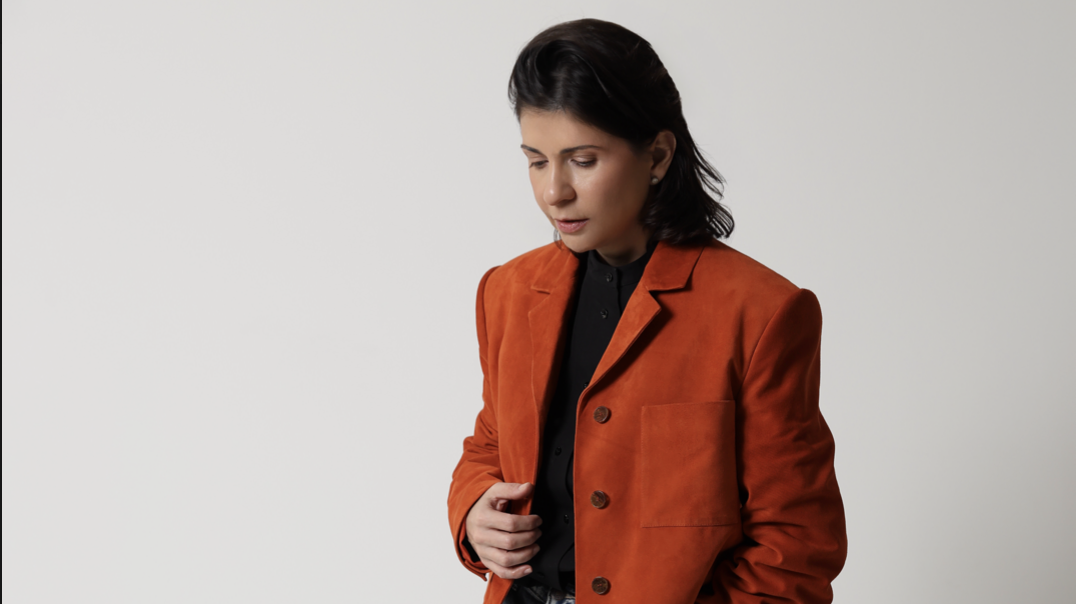
Natella Krapivina is used to speaking directly — and acting with the same decisiveness. A producer, entrepreneur and one of the creators behind the cult travel show Oryol i Reshka (Heads and Tails), she is now developing RIZZ Group, bringing together creative industries, technology and talent management. Yet behind her determination and ability to make difficult decisions is a person for whom silence, family, inner calm and the freedom to simply be herself are equally important.
In an exclusive interview with ELLE O’zbekiston, Natella looks back on her childhood in Central Asia, reflects on strength and vulnerability, freedom, leadership and the price of major decisions, and speaks about her new projects and growing interest in rapidly evolving Uzbekistan.

You were born in Ashgabat and spent the first eleven years of your life in Central Asia. What has stayed with you from that childhood? What elements of Central Asian culture do you remember or feel you absorbed?
I had a wonderful childhood. We lived in a residential neighbourhood, surrounded by friends and neighbours who were sometimes closer to one another than family. The doors were never locked. We could spend entire days drinking tea on a tapchan, listening to mugham, eating watermelon as sweet as honey with brynza, or hot samsa and manty, which my mother made divinely. The same goes for Uzbek plov, by the way, which I love just as much as Azerbaijani plov.
On weekends, my grandfather would always slaughter a lamb. My mother did not particularly like me watching the sacrifice, but I would sneak a look. Somehow, through this rather brutal act, a love of life was born in me — a very mature one, accompanied by the understanding that everything in this world has a beginning and an end. From the lamb’s point of view, a human being is committing a crime. From a human perspective, it is an offering to the Almighty.
My religion, my Eastern roots, the literature that shaped me, the energy that surrounded me — all of these are fundamental pillars of my DNA. I was incredibly lucky. I grew up surrounded by loving people.
Of course, those were difficult years. There were many broken lives because of drugs and criminal conflicts. But when you are a child and your friends are waiting for you outside to play cops and robbers, you are simply living the best version of childhood.
“My Eastern roots, the literature that shaped me and the energy that surrounded me are all fundamental pillars of my DNA.”
People often describe you as someone who speaks very directly, without much diplomacy. Were you born that way, or is it something you had to develop?
Yes, I am a very straightforward person. I even have a painting a friend gave me: it is simply a white canvas with huge, brightly coloured letters that say, “Natella is precise.” (Laughs.)
Today I am much softer than I was twenty years ago. But generally speaking, the degree to which your directness is perceived depends on the perspective of the person receiving it. Some people are more sensitive; they can inflate the smallest thing and give it enormous significance. Those people find me difficult. People who know how to think in terms of what is essential tend to feel comfortable around me.
But I know for certain that I would never deliberately hurt or humiliate someone. I have zero tolerance for cruelty.
If you asked me to choose between a painful truth and a sweet lie, I would choose the first.

Your work requires toughness and decisiveness — particularly in business, creativity and talent production. Where is there room in you for softness and vulnerability?
I am actually a very soft and vulnerable person. I have a very small inner circle, even though professionally I communicate with hundreds of people every month. It is an endless switch between completely different projects.
But at home, alone or with my beloved family, I can finally exhale and become something almost immaterial. I can allow myself not to make any decisions. For me, that is a luxury.
What does being a strong woman mean to you today?
Just as it always has, it means being able to take responsibility and not being afraid to act. And at the same time, retaining the ability to simply iron clothes or cook soup.
Being strong means not being afraid to be different, and always remembering that your self-worth should never depend on someone else’s assets or on another person.
And strength is also freedom. It is not just a philosophical concept. It is a mindset. I value freedom more than anything in the world, although truly feeling it is not always easy.
“Being strong means not being afraid to be different.”
In an industry where decisions were long made predominantly by men, what did you have to strengthen within yourself in order to remain true to your own leadership style?
I have been very lucky. Since childhood, I have often found it even easier to communicate with men than with women. To this day, almost all of my business partners and investors are male friends of mine.
I have never had to change or strengthen anything within myself in order to bring my projects to life. I think energy is the key factor in forming social connections. Gender has nothing to do with it. Neither does your style or your principles.

Oryol i Reshka became one of the most recognisable projects of its time. How did the idea come about? When did you realise it could become something much bigger?
Oryol i Reshka is a genuine cult phenomenon. The programme was on air continuously from 2011 to 2022. Even today, it has an enormous fan base, and the seasons we produced with Kazakhstan and the VOT VOT platform were watched by millions of people.
We are currently working on a new travel show. I cannot reveal the details yet, but it is going to be very interesting.
The idea for Oryol i Reshka was born in the summer of 2010, and we brought it to life quite quickly. It first aired the following February, and it immediately became clear that a star had been born.
We changed people’s understanding of what television could be. We created a whole generation of stars and inspired millions of people to travel.
Oryol i Reshka is a major brand. But more importantly, for me it is a symbol of a life we have all lost forever.
Is there a decision in your career that you would make differently today?
Yes, many of them. I lived intuitively. I created from a place of abundance and with a childlike, naïve view of life. I did not protect myself well enough.
But on a larger scale, I do not regret that my experience unfolded the way it did. My soul is learning, and all of that knowledge — even the negative kind — is necessary for its growth.
Everything that does not develop eventually dies. So yes, there were decisions that were mistakes. But there were far fewer of them than decisions that were absolutely right.

You have a talent for noticing potential before other people do. What is the hardest part about believing in someone before they believe in themselves?
In the CliftonStrengths test, my number-one strength is Individualization — the ability to see the unique qualities in each person. So producing is something that comes naturally to me.
I see the brand long before other people see it. I build a system that allows that potential to unfold and makes what I see visible to everyone else.
The most difficult part is always working with budgets and with the product itself, depending on what we are developing. If it is an artist, you need to work extensively on the music and the visual code. If it is a microchip company, you are working on optimising AI processes.
Today I have an entire group of companies within RIZZ Group, each responsible for its own direction. For the first time in my life, I am not placing my faith in one person or one creative discipline, but in a large company and a team capable of creating products across different creative industries and systematically working with artificial intelligence to improve quality of life.
Years of working with an artist are almost like a relationship. What makes that bond strong?
Shared desires. Friendship.
If you enjoy creating together, if you are also close friends, and your careers are in some sense tied to one another, it creates a very particular atmosphere. But that has only happened to me a couple of times in my life. With most people, I have worked and continue to work on a commercial basis.
Right now, we are preparing to launch our A&R system — a unique song boutique where every track goes through my personal selection, and the best are put up for sale so artists and producers can acquire them. We are also launching the HITPICK distribution platform and will begin working with a much broader circle of artists.
We want to sign those who need a strong team and a strategy, but who do not want a producer for many years and want to remain independent.
Our approach to musicians is very democratic. We will not restrict anyone by language or style. You can sing in Uzbek, Russian, English or Ukrainian. There is only one condition: talent and the desire to create content every day.

When your path diverges from that of a talent, is it always painful? Or have you learned to let people go without regret?
For me, the decision to part ways takes a long time to mature. I know how to be patient, and I do not like losing people who are close to me.
For them, however, it often comes as a surprise because it looks as though I make the decision suddenly, in a single second. They simply do not know what has been happening inside me all that time, or which vessel has finally overflowed.
Yes, parting is always a small death. But today I treat myself with a little more care and no longer allow people to create those centres of pain within me.
How often are you able to spend time with your family? And what does rest mean to you — how do you recover?
Unfortunately, my daughter spends most of her time living in Dubai, so we see each other less often than I would like. But we do spend the summer together.
My entire family lives in Kyiv. I visit whenever I can, and my mother comes to see me from time to time. But I miss them terribly.
I recover through complete solitude and silence. The sheer volume of music, words and people that passes through me leaves me completely exhausted. So silence is my medicine.
And, of course, travel. I dream of coming to Tashkent this autumn. As a child, I visited Samarkand many times because my great-uncle lived there. Later, I came to Tashkent while touring. But now I want to see with my own eyes how the city and country are developing, and eat at your wonderful restaurants.
And perhaps we will organise a public talk for anyone interested in hearing about how to create others without losing yourself.
“The sheer volume of music, words and people that passes through me leaves me completely exhausted. So silence is my medicine.”
Ten years from now, what kind of Natella would you like to remain — not in the credits, but in people’s memories?
Well, I am definitely not planning to die, so for a long time yet I will remain not merely in people’s memories, but quite literally in front of their eyes. (Laughs.)
Seriously, though, I genuinely do not care what people I never think about think of me. I simply want to do what I love and bring something useful into this world.
I also want to see my grandchildren. And I hope that in ten years I will already have several of them.
I did not have the chance to fully experience motherhood. I was 21 when I had Sofia. And despite the very deep bond between us, I missed a lot. I dream of making up for it with my grandchildren.
And in ten years, you will be interviewing me in one of my offices in Tashkent, while I show you the new projects we are launching for the city and the country. Inshallah.
Uzbekistan is currently going through a period of rapid development, including in the creative industries. Do you see potential for future projects or collaborations with Uzbekistan?
You see, I was already one step ahead of you. (Smiles.) We are actively talking now, and there are already several projects under discussion.
At the very least, the first step has already been taken. And I am certain that our professionalism and creativity can fit into Uzbekistan’s already enormous potential and amplify it.
I genuinely admire the way your country integrates the best global initiatives into its own landscape and the scale of the opportunities opening up here for cultivating outstanding specialists in artificial intelligence — and, really, in many other fields as well.

What would you like to wish the readers of ELLE O’zbekiston?
I want to wish all of you a life beneath peaceful skies. I hope that every single day contains at least one moment you would want to remember forever.
May your family fill you with joy and pride, and may there be peace in your heart and the confidence that you are living the life you chose for yourself — and that you feel good within it.
I wish you the courage to invest in yourselves and never regret spending time or money on yourselves.
You deserve it.